What Naperville's guidance means for a new chimney cap
Two City of Naperville documents bear on this job. One is the Guide to Building Permits (revised 10/31/2022). The other is the Historic Preservation Commission's Historic Building Design and Resource Manual (adopted 2010). Here is what each says and how it affects the installation.
Homes in the historic district: talk to City staff first
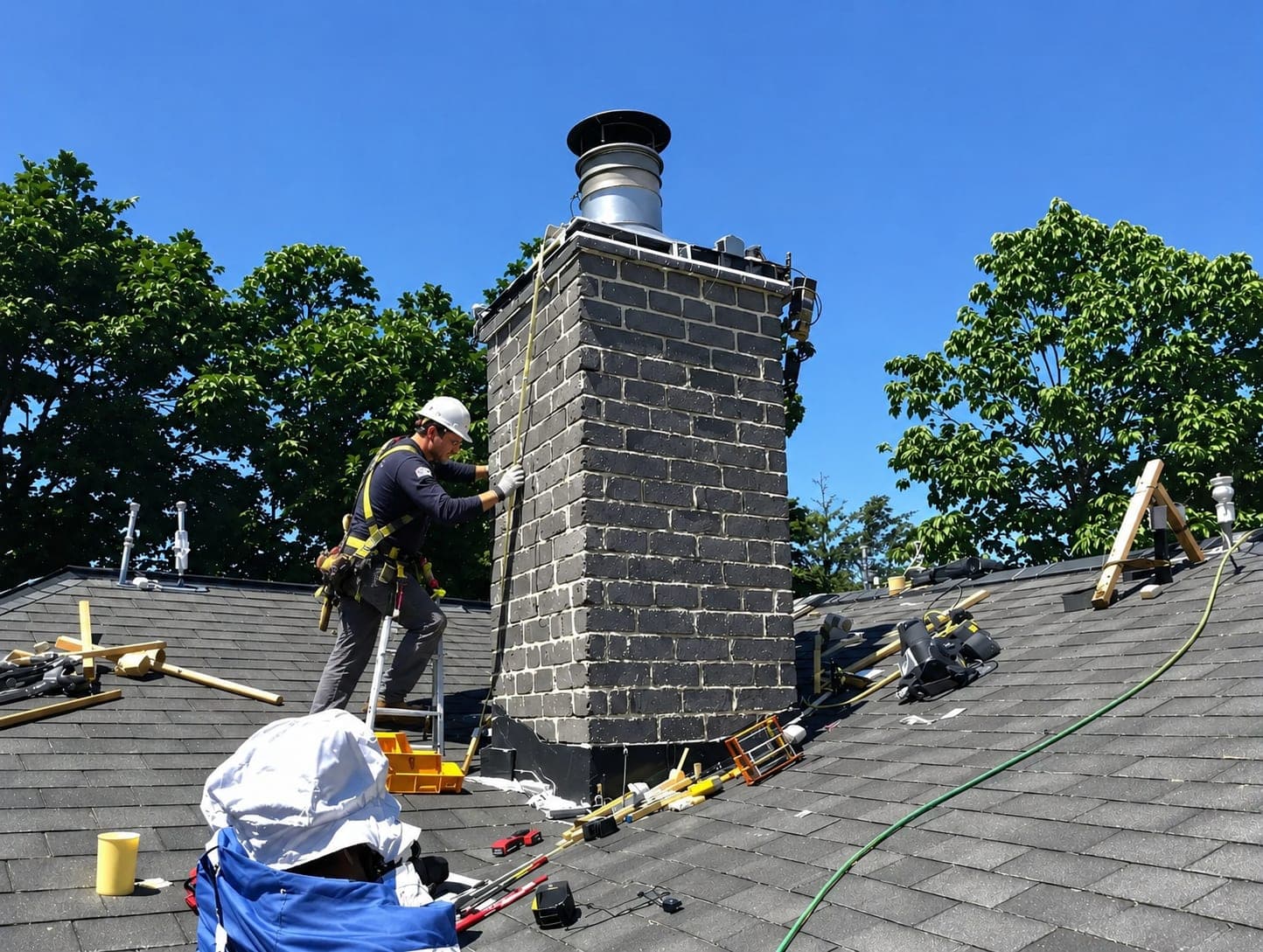
Naperville's Guide to Building Permits asks owners to contact City staff about any work on a building in the historic district, because additional requirements may apply. That request covers any work, so it covers a chimney cap. If your home is in the district, make that contact before the installation date. Any requirements the City sets can then be built into the plan instead of being discovered afterward.
A chimney you no longer heat with
The Historic Building Design and Resource Manual encourages capping chimneys no longer used for heating. A chimney that sits unused still takes in rain and leaves. It also gives birds and small animals an open shaft. A chimney nest in an unused flue often goes unnoticed until there is an odor or a blockage. Capping that flue is the step the manual points to.
A chimney in regular use: clean flue first, cap on top
The same manual encourages cleaning chimneys in regular use to prevent creosote build-up. It also notes that flue liners can be applied to prevent creosote build-up. For a fireplace or stove you use often, the cap is one part of keeping the system sound. A cleaning before the cap goes on means you start with a clear flue. If the flue's condition raises questions, a liner is something we can look at during the same visit.
The job in brief
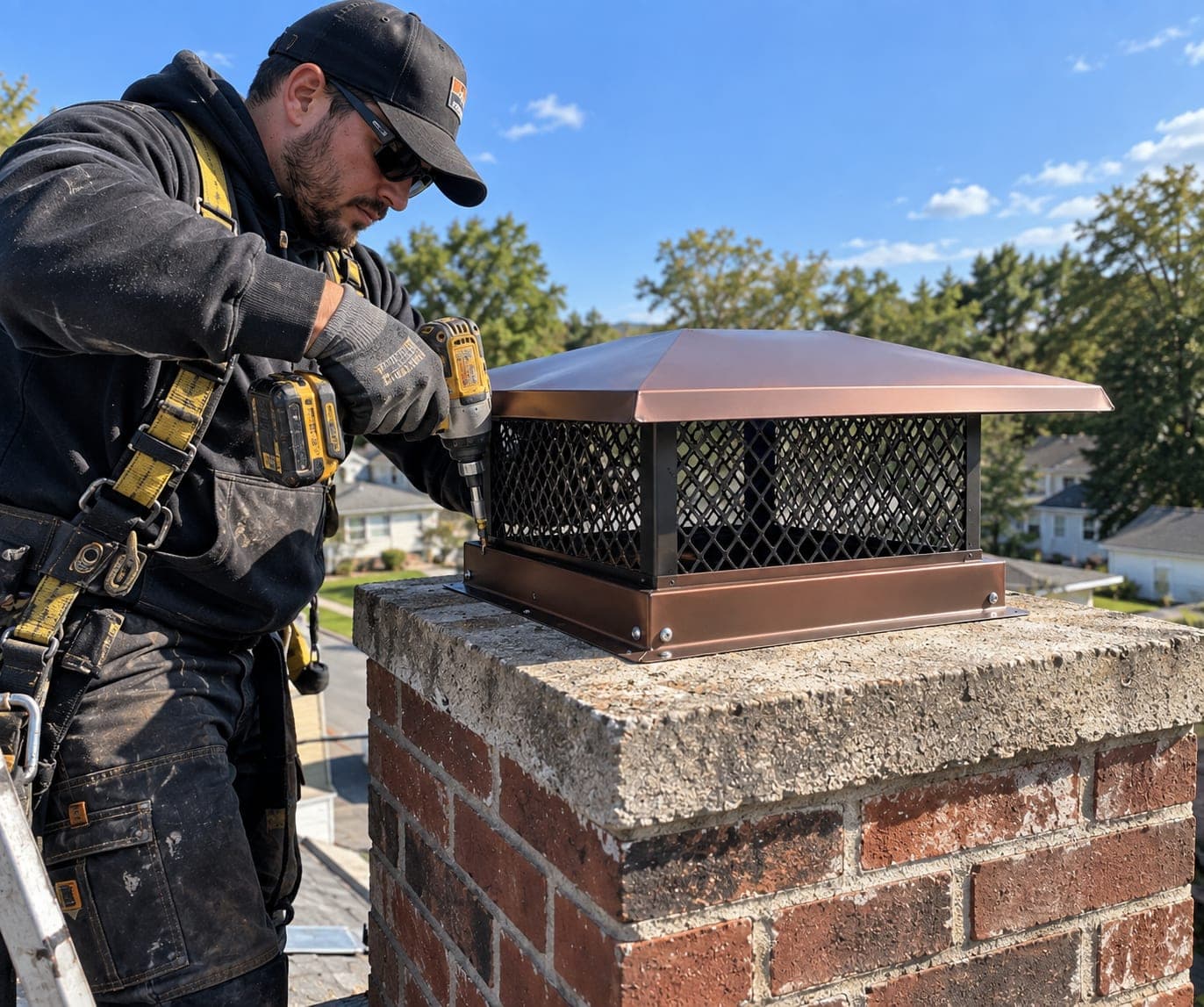
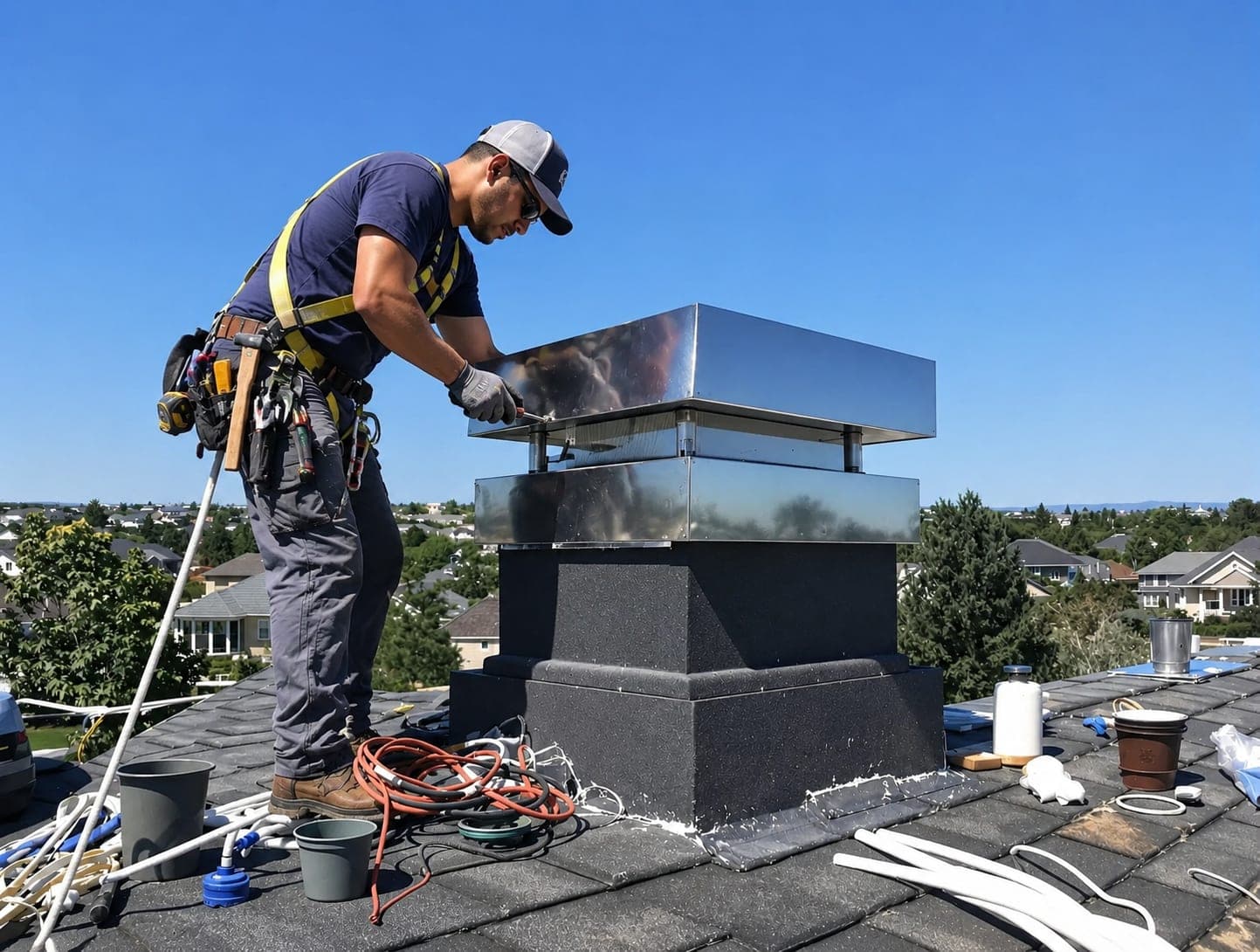
We measure the flue or flues and check the top of the chimney the cap will sit on. Then we fit a cap sized to that chimney, secure it, and confirm that the mesh and hood leave the flue drawing freely. Single-flue and multi-flue chimneys take different cap styles. Masonry and factory-built chimneys attach differently. For materials, cap styles and what to expect on the day, read how chimney cap installation works.
When a cap is the right job, and when something else comes first
- Open flue, sound chimney top: a cap is usually the whole job.
- Animals or a nest already inside: the flue is cleared first, and the cap and screen go on afterward so nothing can return.
- Cracked crown or loose brick at the top: a cap needs a solid surface, so chimney repair for homes in Naperville may need to come before the cap.
- Factory-built chimney with a metal chase: the top may call for a chase cover instead of, or along with, a cap. The differences are laid out in chimney cap vs chase cover.
- Heavy creosote in a chimney you use: a cleaning comes first, and the cap goes on a clean flue.
More for homeowners in Naperville
Everything we handle for homes in the city is gathered on our Naperville area page. For the full details of the job itself, the chimney cap installation service page covers chimney fireplace caps, sizing and fitting.
Request an estimate
Tell us about your chimney and whether the home is in the historic district, and we'll plan the cap around it.
Sources (1)
The sources of the Naperville facts on this page.
- 1City of Naperville Guide to Building Permits (revised 10/31/2022); City of Naperville Historic Preservation Commission - Historic Building Design and Resource Manual (adopted 2010)