Chimney rebuilding, in brief
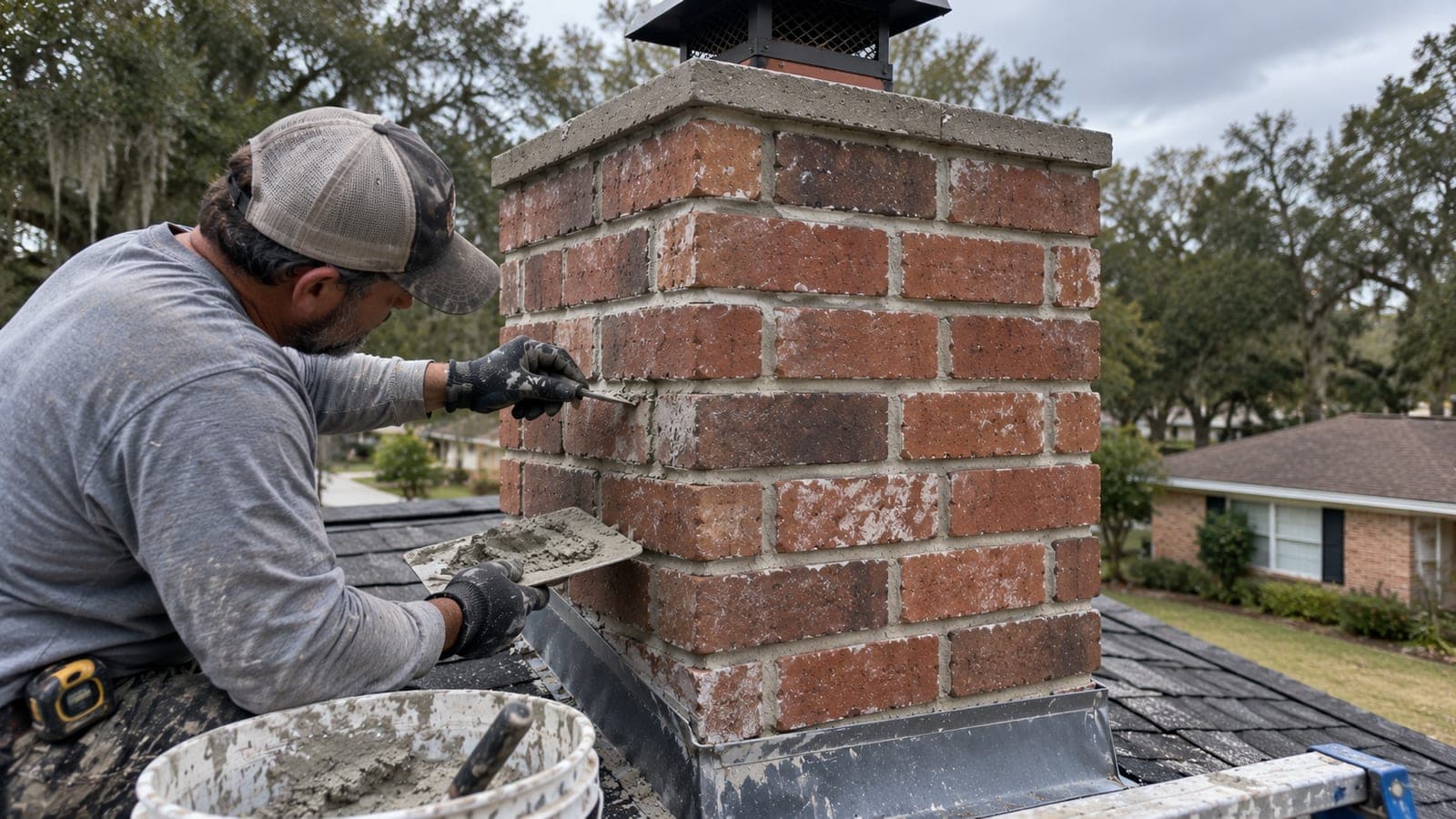
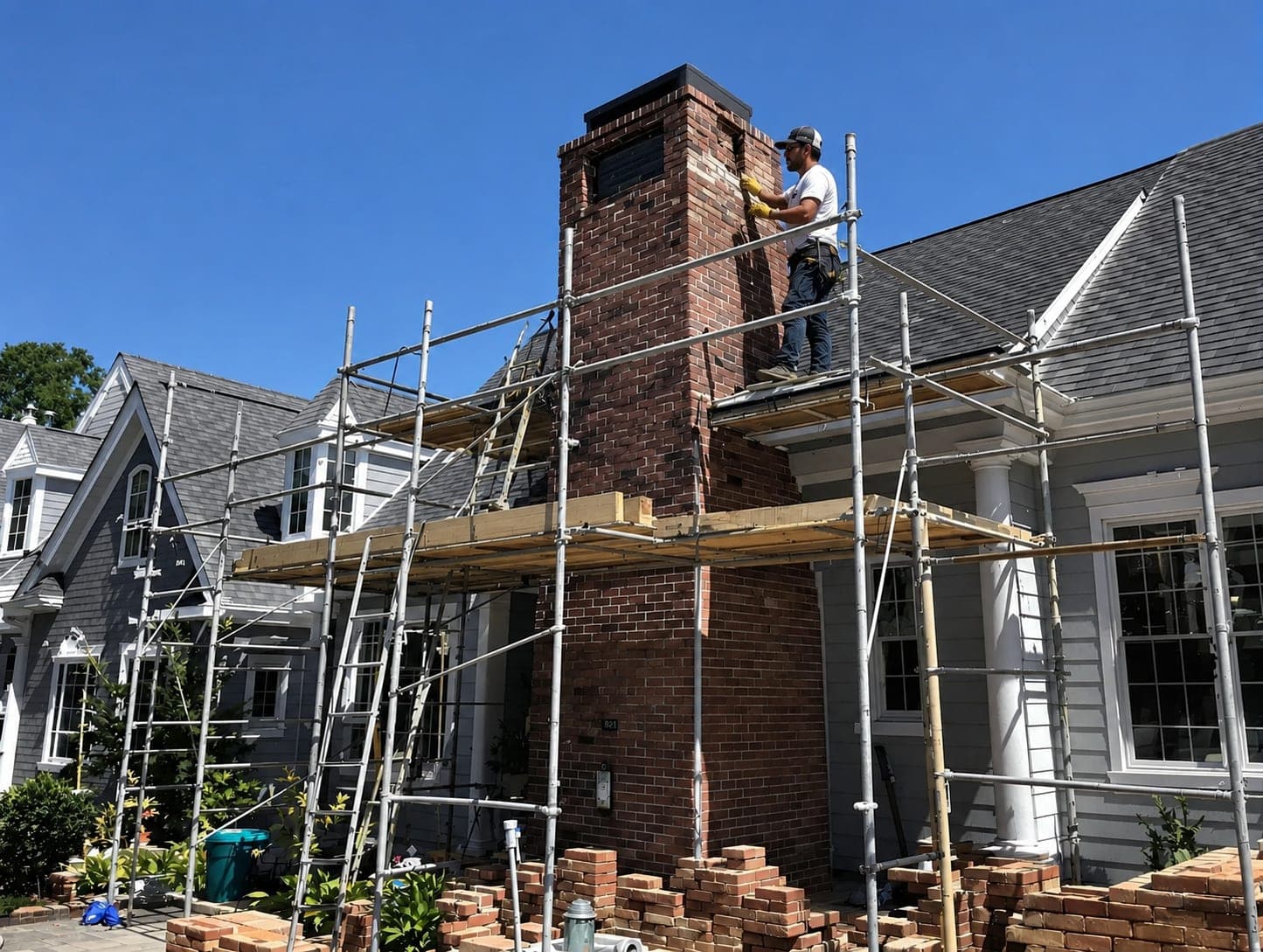
A chimney rebuild takes down the failing section of a masonry chimney and lays it back up with sound brick and fresh mortar. That is often the part above the roofline, and sometimes more. The work usually includes chimney crown rebuilding at the top and new flashing where the stack meets the roof. How much comes down depends on what the inspection finds. Loose top courses are a smaller job than a stack that has shifted. For the full sequence, from inspection through the finished crown, read how chimney rebuild works.
Rebuilding a chimney in Naperville's historic district
The Naperville Local Historic District was designated by the City Council in 1986. It currently includes approximately 320 properties, including part of the North Central College campus and 253 homes (source: Local & Federal Historic Districts | Naperville, IL). If your home is one of them, a chimney rebuild involves more than masonry.
Naperville's Guide to Building Permits asks owners to contact City staff about any work on a building in the historic district, because additional requirements may apply (source: City of Naperville Guide to Building Permits, revised 10/31/2022). Make that contact before the old chimney comes down, while the plan can still change.
Which side of the house the chimney is on matters
Naperville's summary of Certificate of Appropriateness (COA) requirements for the historic district says no COA or review is needed for secondary (interior side) or rear façades not visible from the street. Primary façades are treated differently. There, a Historic Preservation Commission COA is required for removing original architectural features without replacement. It is also required for exterior building materials that change reveal or profile, or that use materials not listed for administrative approval (source: City of Naperville, A Summary of COA Requirements). Here is what that means for a rebuild:
- A chimney on a rear wall or interior side wall that can't be seen from the street may need no COA or review.
- A chimney on the street-facing side is where brick choice, mortar joint profile and the overall shape can trigger a COA.
- Taking a chimney down on a primary façade and not replacing it is the kind of change that requires a COA.
Reusing the original brick
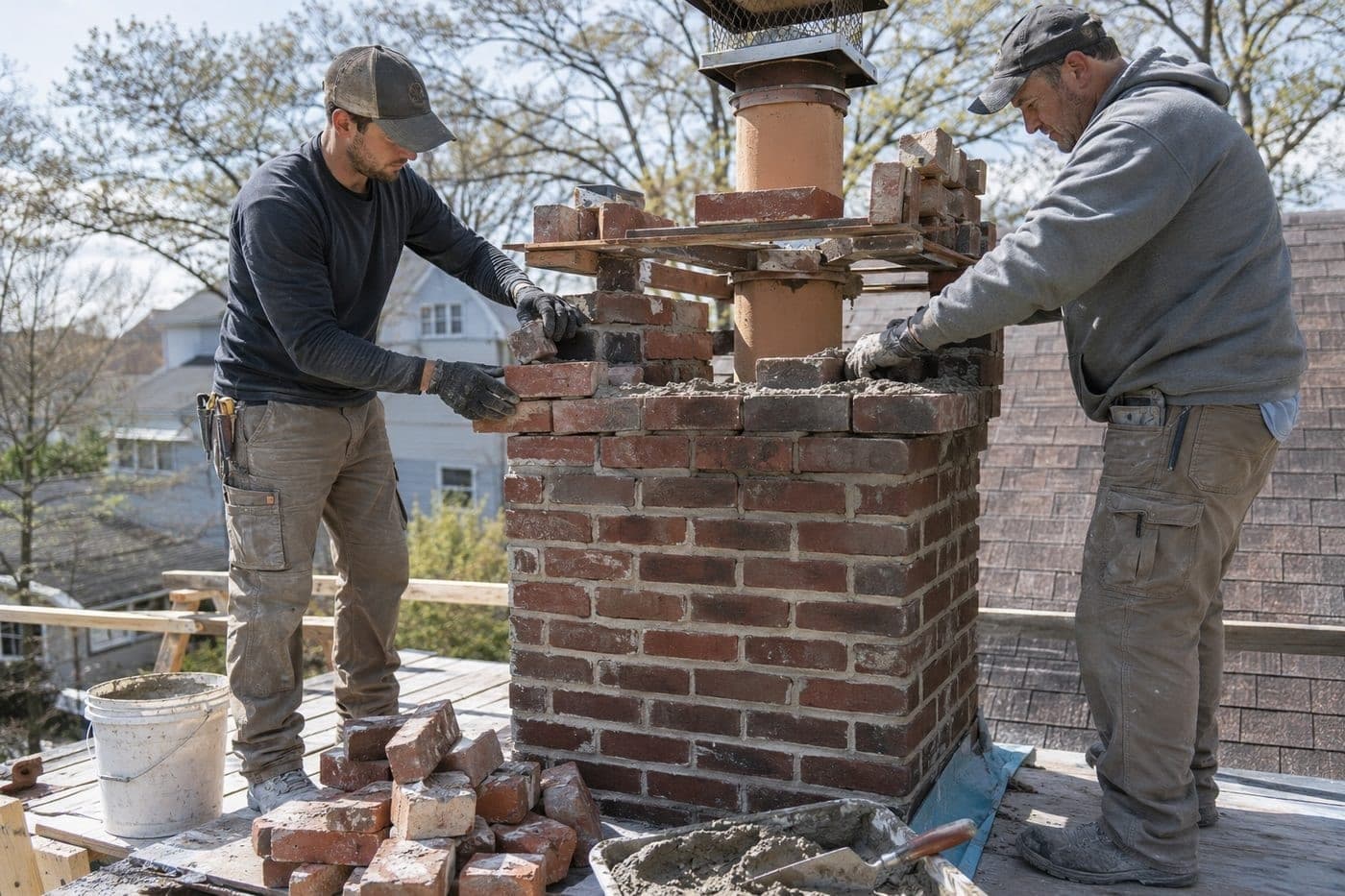
Naperville's Historic Building Design and Resource Manual encourages rebuilding chimneys with salvaged brick from the existing chimney. It accepts rebuilding to match the original design, and it discourages removing or altering a chimney that is a significant feature of the home (source: City of Naperville Historic Preservation Commission, Historic Building Design and Resource Manual, adopted 2010). In practice, the old brick is taken down carefully, sorted, and set aside for reuse. The new stack follows the original height and shape, so it doesn't become a redesign.
Before a rebuild on a historic-district home
- Confirm whether your property is in the Naperville Local Historic District.
- Contact City staff about the planned work, as the Guide to Building Permits asks.
- Note whether the chimney is on a street-facing façade or on a rear or interior side wall not visible from the street.
- Plan to salvage the existing brick where it can be reused.
- Plan to match the original chimney design rather than alter it.
Building codes for plans submitted from April 1, 2026
Under Ordinance 26-010 (February 2026), Naperville reviews all plans submitted on or after April 1, 2026 under the 2024 International Residential Code, 2024 International Fuel Gas Code, 2024 International Mechanical Code and 2024 International Fire Code, among others, with local amendments in the Naperville Municipal Code (source: Building Permits | Naperville, IL). This covers all plans, not only those for historic-district homes, so plans for a rebuild submitted today are reviewed under those 2024 editions.
Rebuild or a smaller repair?
A full rebuild fits when bricks are loose, spalled or crumbling through much of the stack, or when the chimney has started to lean or pull away from the house. If you're seeing tilt or open gaps, start with what a leaning or damaged chimney usually points to. When the problem is limited to worn mortar joints, a cracked crown or failed flashing, a targeted fix often does the job. That work is covered under chimney repair for homes in Naperville. An inspection is what separates the two, and on a historic home the answer can also change which City review applies.
Getting an estimate
Estimates are free. We look at the chimney, tell you whether it needs a partial or full rebuild or whether a repair will do, and explain what the work involves. For more on the job itself, read about our chimney rebuild service. You can also find everything else we do for homes in Naperville.
Free estimates.
Request an estimate for your chimney rebuild and get a clear answer on how much of the stack needs to come down.
Sources (2)
The sources of the Naperville facts on this page.
- 1Local & Federal Historic Districts | Naperville, IL
- 2City of Naperville Guide to Building Permits (revised 10/31/2022); Building Permits | Naperville, IL; City of Naperville - A Summary of COA Requirements (COA Requirements Table), linked from Regulations for Historic Districts & Landmarked Properties; City of Naperville Historic Preservation Commission - Historic Building Design and Resource Manual (adopted 2010)