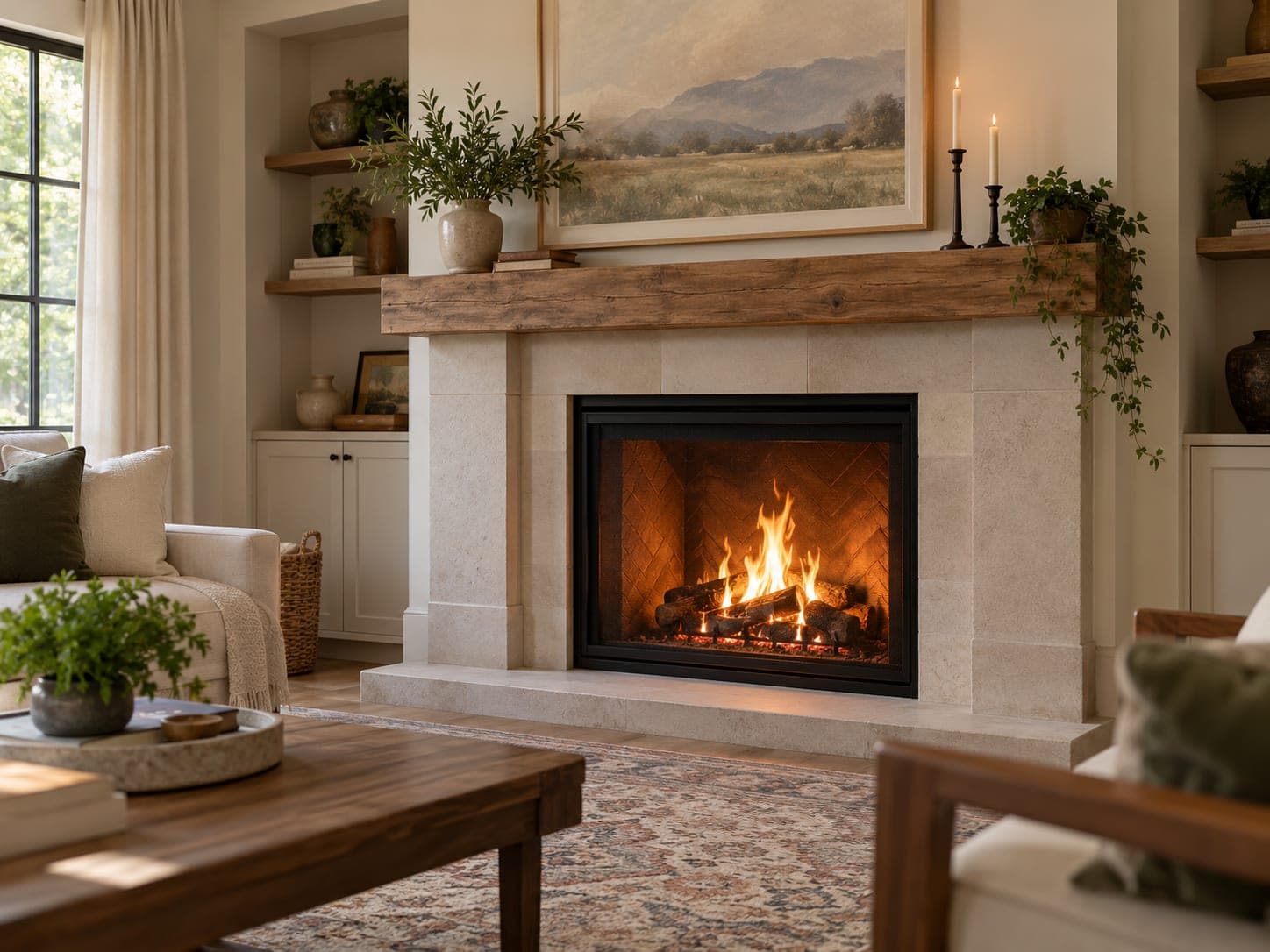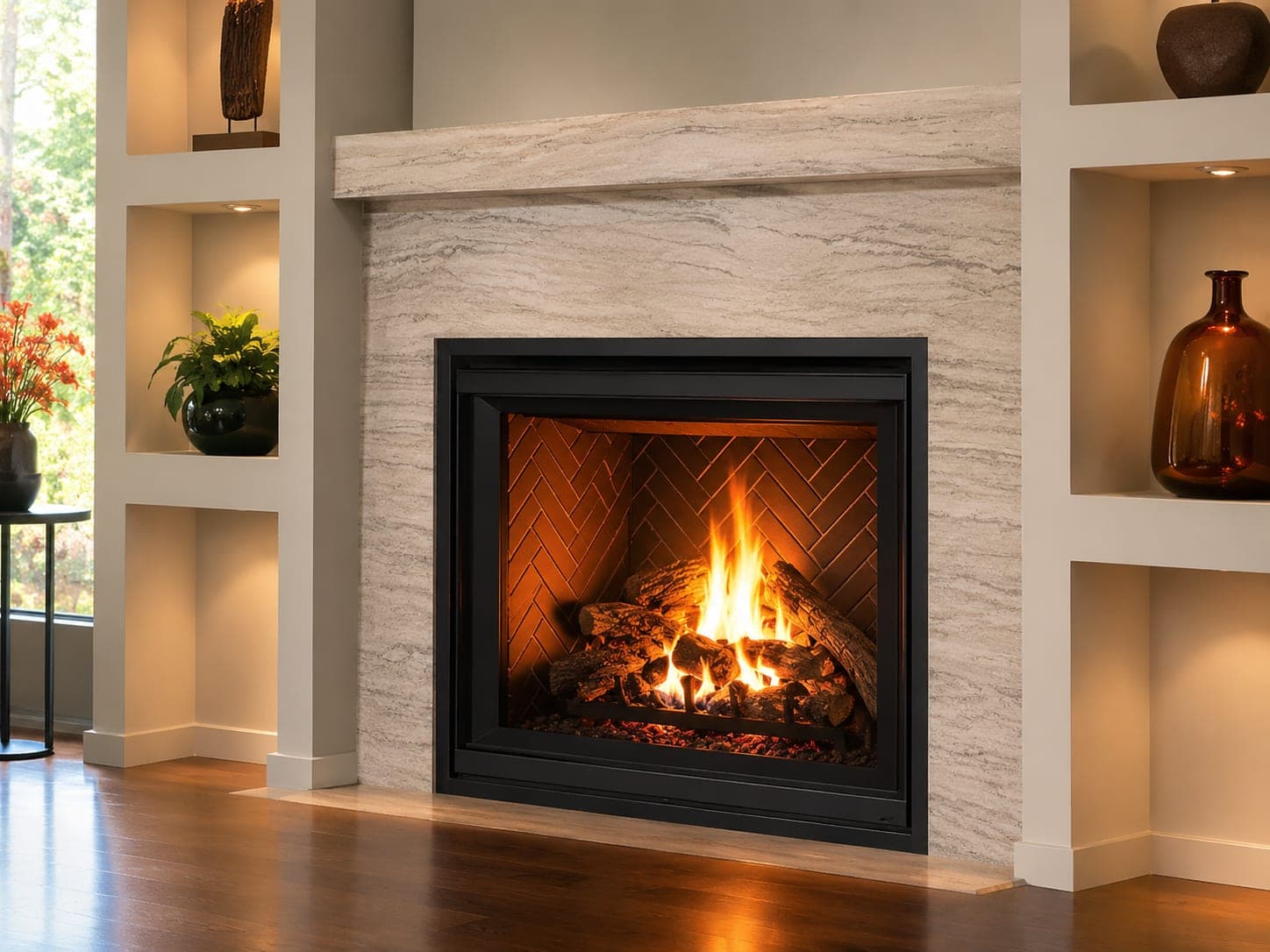
Fireplace installation in brief
Fireplace installation means fitting a new fireplace into your home. That can be a gas unit, a wood-burning firebox or a factory-built fireplace, along with the venting or chimney liner it needs, the gas line for gas models, and the framing and surround that finish the job. During that visit we look at where the fireplace will go, how it will vent and what any existing chimney can support. For unit types, venting options and how the work is staged, read how fireplace installation works.
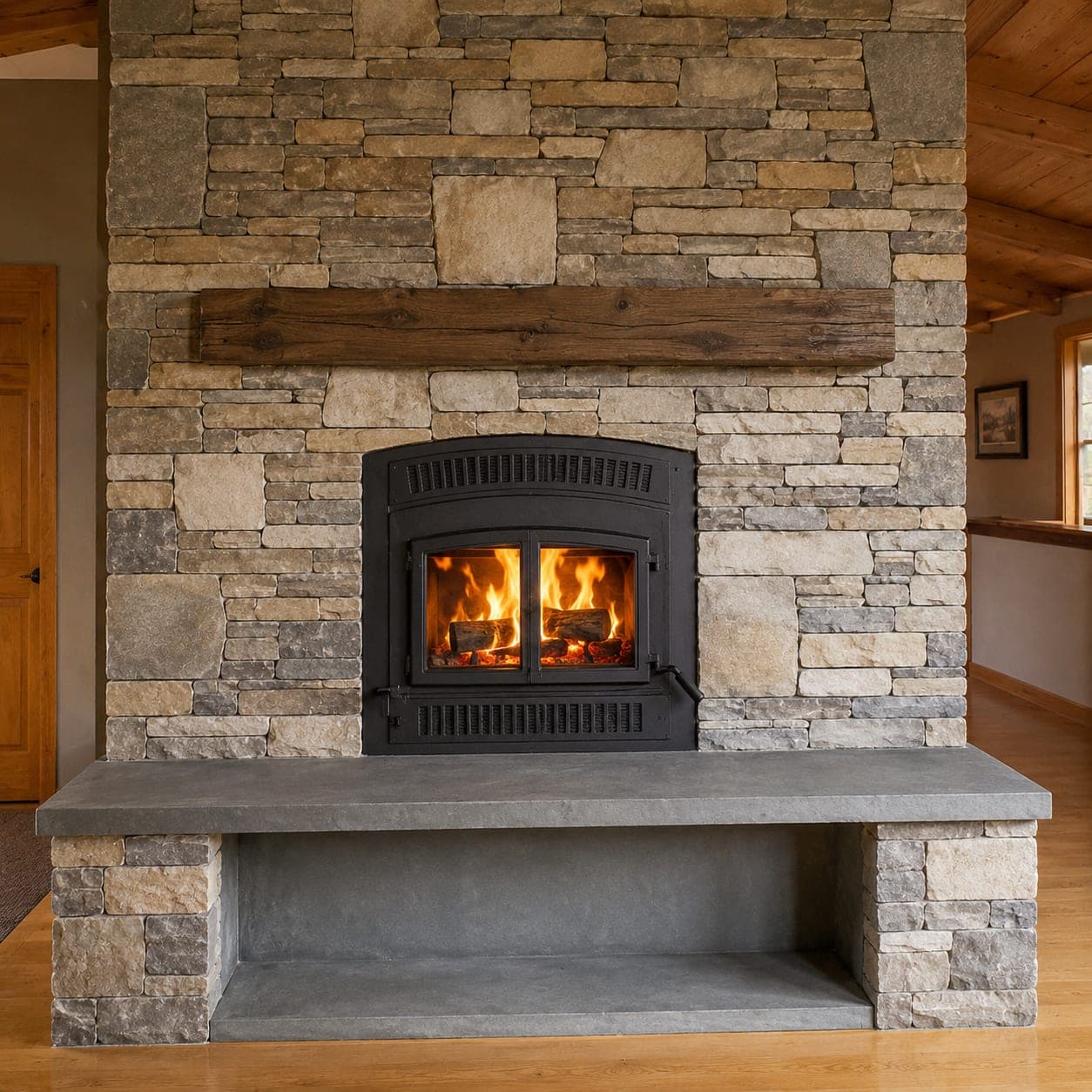
Evanston permit and inspection rules for a new fireplace
Evanston has adopted the 2021 International Residential Code, the 2021 International Mechanical Code and the 2021 International Fuel Gas Code, each with local amendments (source: Building Permits, City of Evanston). Between them, those codes cover the parts of the house a fireplace installation touches: the structure, the venting and mechanical equipment, and the gas piping and appliance.
A permit comes first, with no model-code exemptions
Evanston's Fuel Gas Code amendments (Ordinance 29-O-22, Exhibit H) delete the model code's section 106.2 permit exemptions and refer applicants to the Building & Inspection Services Division. Evanston's Mechanical Code amendments (Ordinance 29-O-22, Exhibit F) delete the model code's section 106.2 list of work that needs no permit, and direct applicants to the same Division for exempt work. The City's HVAC permit worksheet also states that no work may begin without a permit (source: City of Evanston Building and Development Services Division, HVAC Worksheet). Don't assume a small gas or venting job is exempt just because the model code says so. Take the permit question to the Division before work starts.
The unit has to be listed
The City of Evanston's HVAC permit worksheet states that all equipment installed in the City must be listed by an accredited testing laboratory (source: City of Evanston Building and Development Services Division, HVAC Worksheet). For a fireplace, that means choosing a listed unit and installing the unit and its venting the way the listing describes. If you're weighing gas models, our guide to direct vent vs ventless gas fireplaces explains how the two types differ before you commit to one.
Walls stay open until the rough inspection
The City of Evanston's building inspection rules require an HVAC rough inspection. At that inspection, the inspector must see all equipment, piping and duct work installed before any wall, floor or ceiling coverings go on (source: City of Evanston Building & Development Services, Building Inspections). If your fireplace's gas piping and venting fall under that inspection, the drywall, stone, tile or mantel around the unit has to wait until afterward. Any finished chase waits too. If a tile setter or finish carpenter is part of the project, book them for after the rough inspection.
The contractor attends the City inspection
Evanston's HVAC permit worksheet states that the HVAC contractor must be present for the City inspection (source: City of Evanston Building and Development Services Division, HVAC Worksheet). When you schedule the inspection, pick a date that works for the installer as well as for you.
How a fireplace installation is sequenced in Evanston
Free estimate
We look at the location, the venting path, any existing chimney and, for gas models, the gas supply.
Choose a listed unit
Pick a fireplace listed by an accredited testing laboratory, with venting that matches its listing.
Permit in place
No work begins until the permit is issued.
Rough-in
We set the unit and install the gas piping and venting, leaving them exposed.
Rough inspection
Where it applies, the inspector sees the equipment, piping and duct work before any coverings go on, with the contractor present.
Finish work
The surround, mantel and wall finishes go on after the inspection.
Outdoor fireplaces fall under the fire pit rules
Evanston's Fire Prevention Regulations (Section 307.4.3) treat permanent and portable outdoor fireplaces as fire pits. They allow only seasoned firewood or commercial logs, and they bar outdoor fireplaces from being used within 10 feet of a structure or combustible material (source: City of Evanston, Ordinance 29-O-22, Exhibit C, Title 4 Chapter 4 Fire Prevention Regulations, 307.4.3 Fire Pit Regulations). If an outdoor fireplace is in your plans, keep that 10-foot clearance from the house, the garage, a wood fence or a deck in mind when you choose its spot.
When a different job fits better
- A full installation makes sense when you're adding a fireplace where none exists, or replacing a unit that can't be put back into service.
- If you have a sound masonry firebox and want better heat or a switch to gas, a fireplace insert fitted into the existing opening may suit you better than a full installation.
- If the trouble is a leaking, cracked or crumbling chimney above an existing fireplace, start with chimney repair in Evanston. A new fireplace won't fix a chimney that needs work.
Getting your installation started
Request an estimate and we'll look at the space, the venting route and what the permit and inspection steps will involve for your home. For the full scope of the work, read about our fireplace installation service. To see the other chimney, fireplace and dryer vent work we do in Evanston, visit the area page.
Free estimates.
Get in touch to plan a new gas or wood-burning fireplace for your Evanston home.
Sources (2)
The sources of the Evanston facts on this page.
- 1Building Permits - City of Evanston; City of Evanston Building and Development Services Division - HVAC Worksheet; City of Evanston Building & Development Services - Building Inspections; City of Evanston - Ordinance 29-O-22 Exhibit H, Fuel Gas Code (Title 4, Chapter 17); City of Evanston - Ordinance 29-O-22 Exhibit F, Mechanical Code (Title 4, Chapter 6)
- 2City of Evanston - Ordinance 29-O-22, Exhibit C, Title 4 Chapter 4 Fire Prevention Regulations, 307.4.3 Fire Pit Regulations