Chimney liner installation in brief
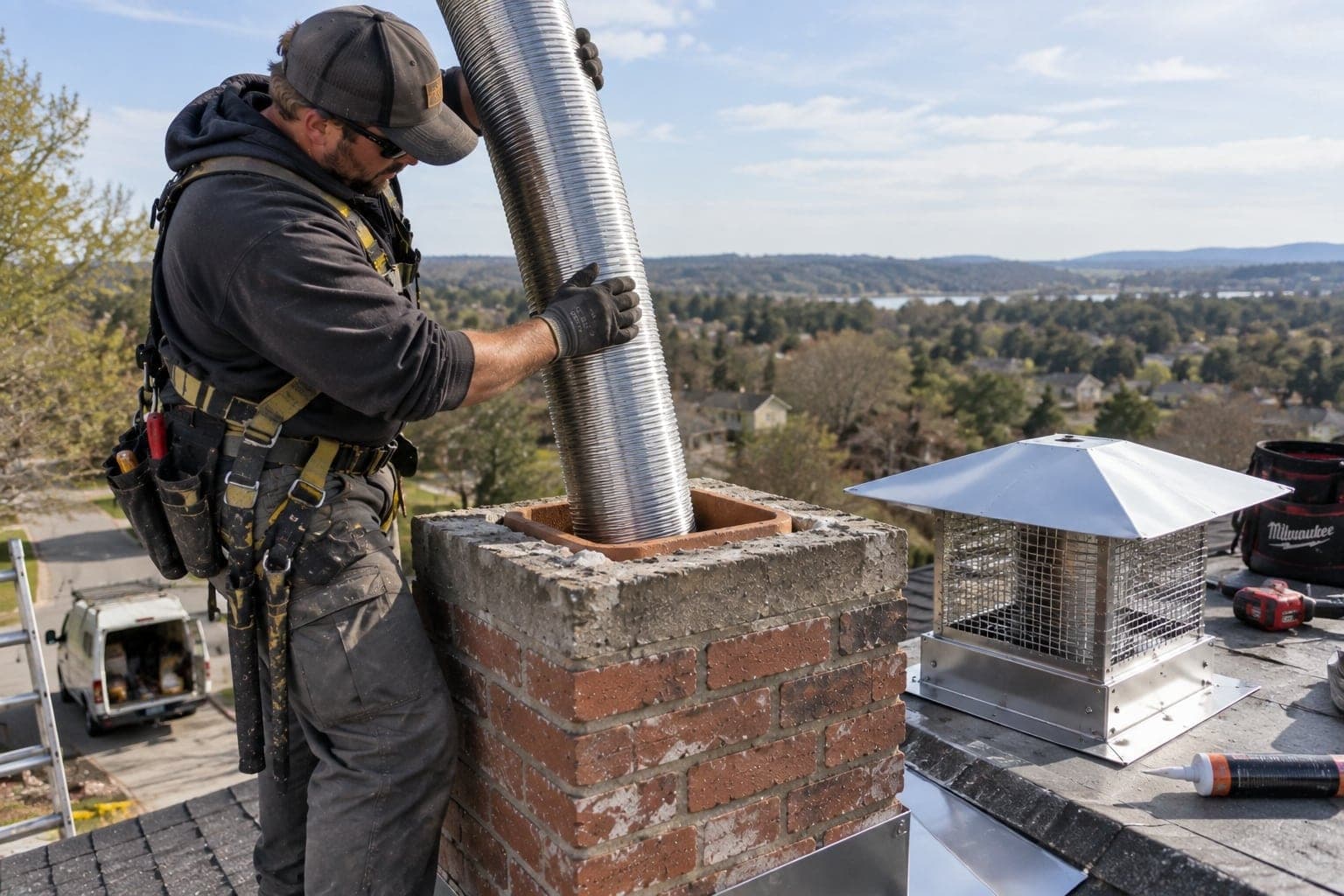
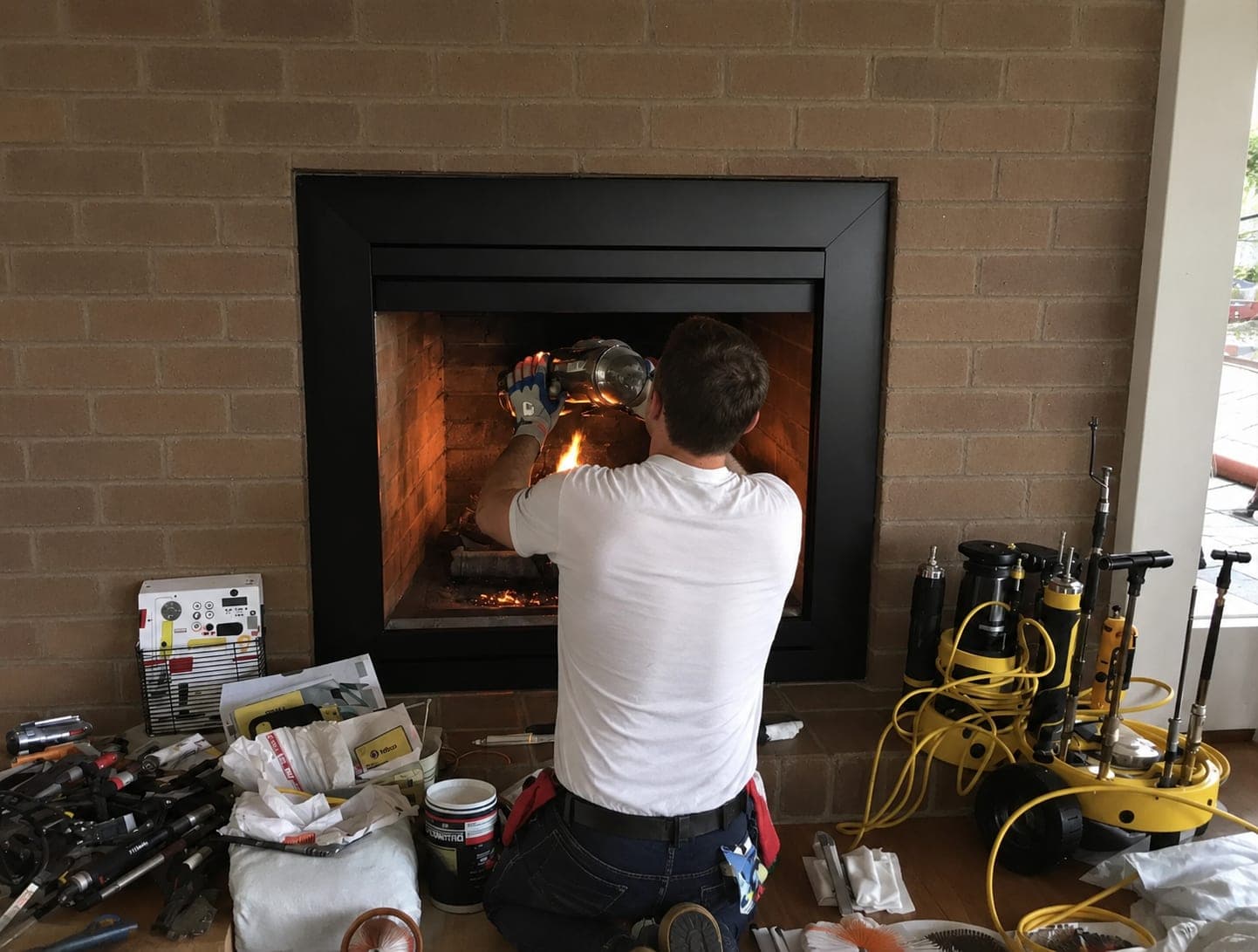
A chimney liner is the flue's inner wall. It carries smoke and combustion gases up and out, and it keeps heat and corrosive byproducts away from the brick and mortar around it. Installation means inspecting and measuring the flue, sizing a liner for the appliance it serves, running it from the appliance connection to the top, insulating it where the job calls for it, and finishing with a top plate and cap. Relining an existing masonry chimney is often done with a stainless steel chimney liner. The materials and steps are covered in how chimney liner installation works.
What Evanston's codes mean for a liner job
Evanston has adopted the 2021 International Residential Code, the 2021 International Mechanical Code and the 2021 International Fuel Gas Code, each with local amendments (source: Building Permits, City of Evanston). Several of those local amendments and City documents affect a chimney flue liner job directly. They apply to anyone having the work done, whether you own and live in the house or manage a rental.
Permits: the City decides what is exempt
Evanston's Mechanical Code amendments (Ordinance 29-O-22, Exhibit F) delete the model code's section 106.2, which lists work that needs no permit, and direct applicants to the Building & Inspection Services Division for exempt work. Evanston's Fuel Gas Code amendments (Ordinance 29-O-22, Exhibit H) likewise delete the model code's section 106.2 permit exemptions and refer applicants to the same division. The City of Evanston's HVAC permit worksheet also states that no work may begin without a permit.
The model code's exemption list does not settle the question in Evanston. If you are relining a flue, especially one that serves a gas furnace, boiler or water heater, settle the permit question with the Building & Inspection Services Division before an installation date is set.
Listed equipment only
The City of Evanston's HVAC permit worksheet states that all equipment installed in the City must be listed by an accredited testing laboratory (source: City of Evanston Building and Development Services Division, HVAC Worksheet). For a liner job, that means the liner system should come with listing documentation that matches what is installed. Ask to see it with any quote you compare.
Inspection day
Evanston's HVAC permit worksheet states that the HVAC contractor must be present for the City inspection (source: City of Evanston Building and Development Services Division, HVAC Worksheet). When a relining job is part of work covered by an HVAC permit, set the inspection date with whoever holds that permit so they can be there.
Old flues beside a working fireplace flue
Evanston's Mechanical Code amendment 801.18.5 lets an abandoned masonry chimney liner serve as a chase for high-efficiency appliance vents beside an active solid-fuel chimney, if that chimney extends 2 feet above the vent and the chase is sealed weather-tight (source: City of Evanston, Ordinance 29-O-22, Exhibit F, Title 4 Chapter 6 Mechanical Code).
This matters when a chimney has more than one flue, such as a wood-burning fireplace flue next to an old furnace flue. If the furnace is replaced with a high-efficiency unit that vents differently, the old flue may be usable as a chase rather than relined, provided those conditions are met. The wood-burning side still needs a sound liner of its own. An inspection shows which flues you have and what condition each one is in.
Housing age and what it tells you
In Evanston, 40.3% of housing units were built before 1940 and 29.9% between 1940 and 1969, and the median year built is 1953 (source: CMAP Community Data Snapshot, Evanston; American Community Survey 2020-2024 five-year estimates). Those figures describe the city's housing as a whole, not your house. Whether your chimney needs a new liner depends on what an inspection, ideally with a camera run up the flue, finds inside it.
When a new liner is the right job, and when it isn't
- A new liner usually fits when an inspection shows a cracked, collapsed or missing flue liner, or when the existing flue is the wrong size for the appliance now connected to it.
- A smaller fix may do when the liner is sound except for a limited section of damage. Liner repair is a separate job from full liner replacement.
- The problem may be outside the flue if you see crumbling mortar, loose brick or a cracked crown. That is chimney repair in Evanston, and it is often done before relining.
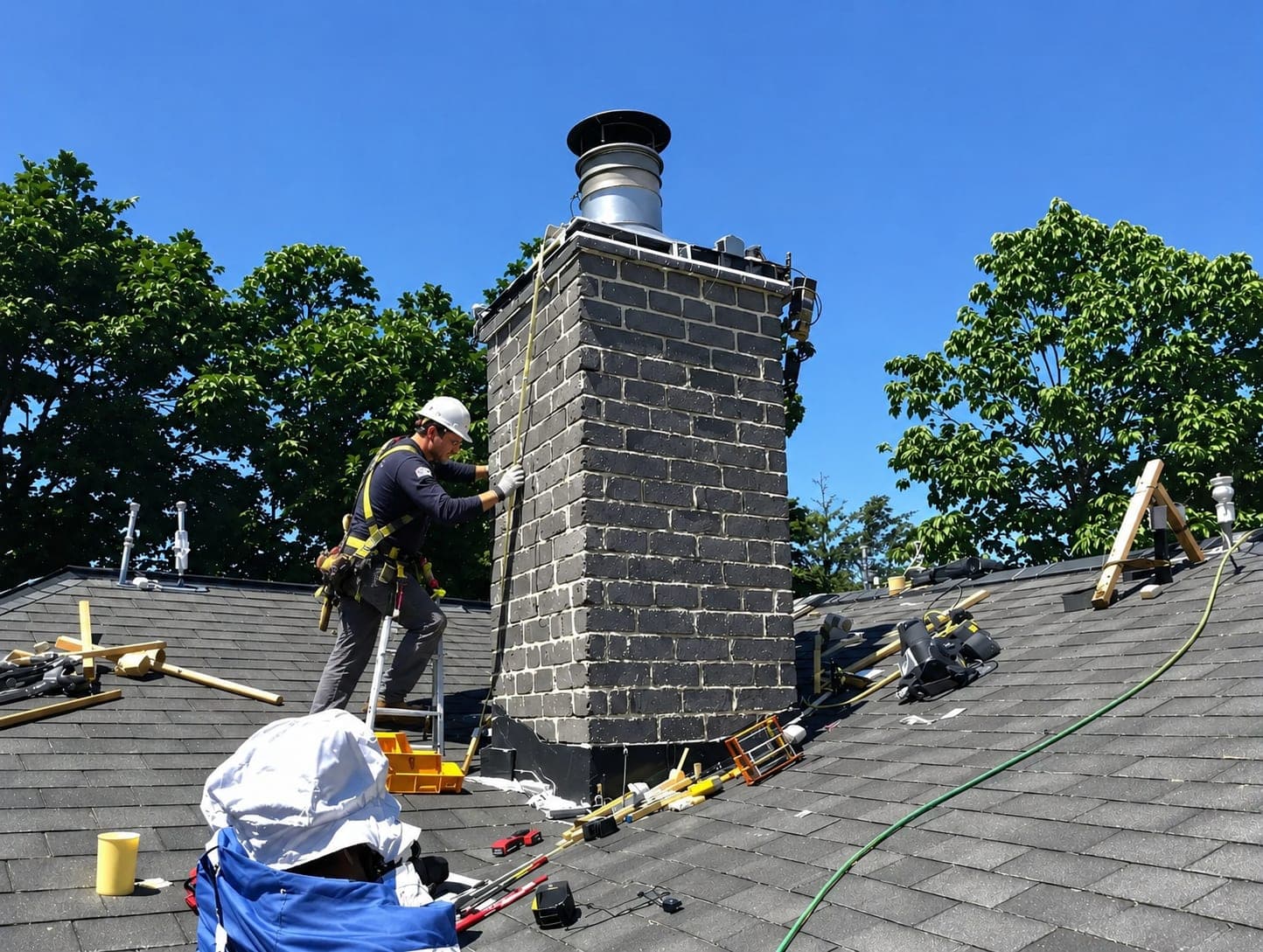
- The top of the chimney matters too. A new liner ends at a top plate and cap, and if you aren't sure which covering your chimney needs, read about the difference between a chimney cap vs chase cover.
How a relining job runs
Inspection
We check the flue, the appliance connection and the chimney top, and measure the flue for sizing.
Free estimate
You get a written scope covering the liner type, its size, whether it needs insulation, and the cap.
Permit question settled
The permit question goes to the City's Building & Inspection Services Division before work starts.
Installation
The liner is run from the top down, connected at the appliance end and sealed at the top plate.
Finish and inspection
The cap goes on, and any required City inspection is scheduled with the people who need to be present.
Booking a liner installation
Gas fireplace and gas appliance work is offered, and we work on all major brands. Commercial and property-manager work is offered too. For materials and options, read about the full chimney liner installation service. For everything else we handle locally, browse chimney and fireplace work in Evanston. Request an estimate to get started.
Sources (2)
The sources of the Evanston facts on this page.
- 1CMAP Community Data Snapshot | Evanston
- 2Building Permits - City of Evanston; City of Evanston - Ordinance 29-O-22, Exhibit F, Title 4 Chapter 6 Mechanical Code (local amendments); City of Evanston Building and Development Services Division - HVAC Worksheet; City of Evanston - Ordinance 29-O-22 Exhibit H, Fuel Gas Code (Title 4, Chapter 17); City of Evanston - Ordinance 29-O-22 Exhibit F, Mechanical Code (Title 4, Chapter 6)