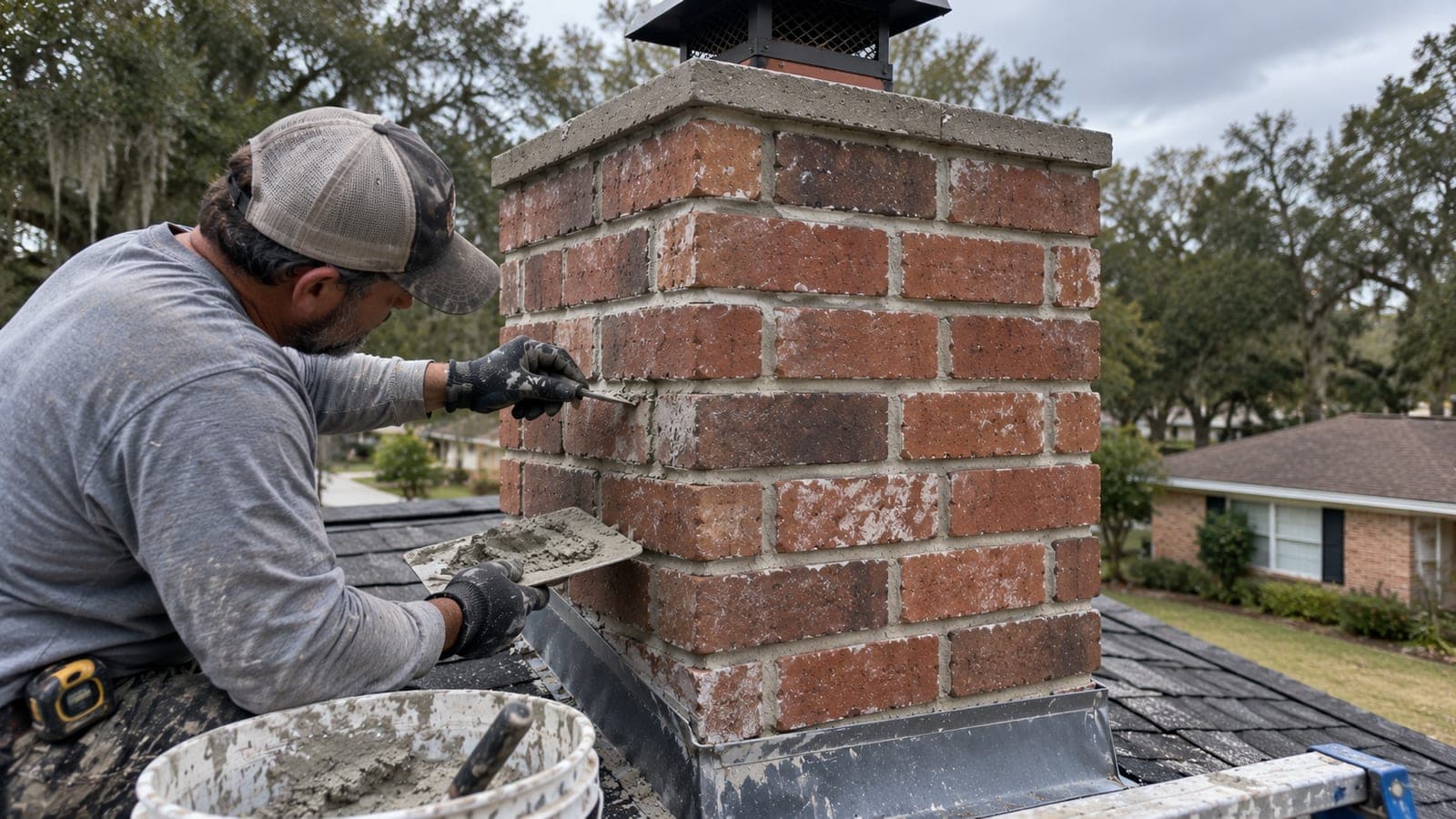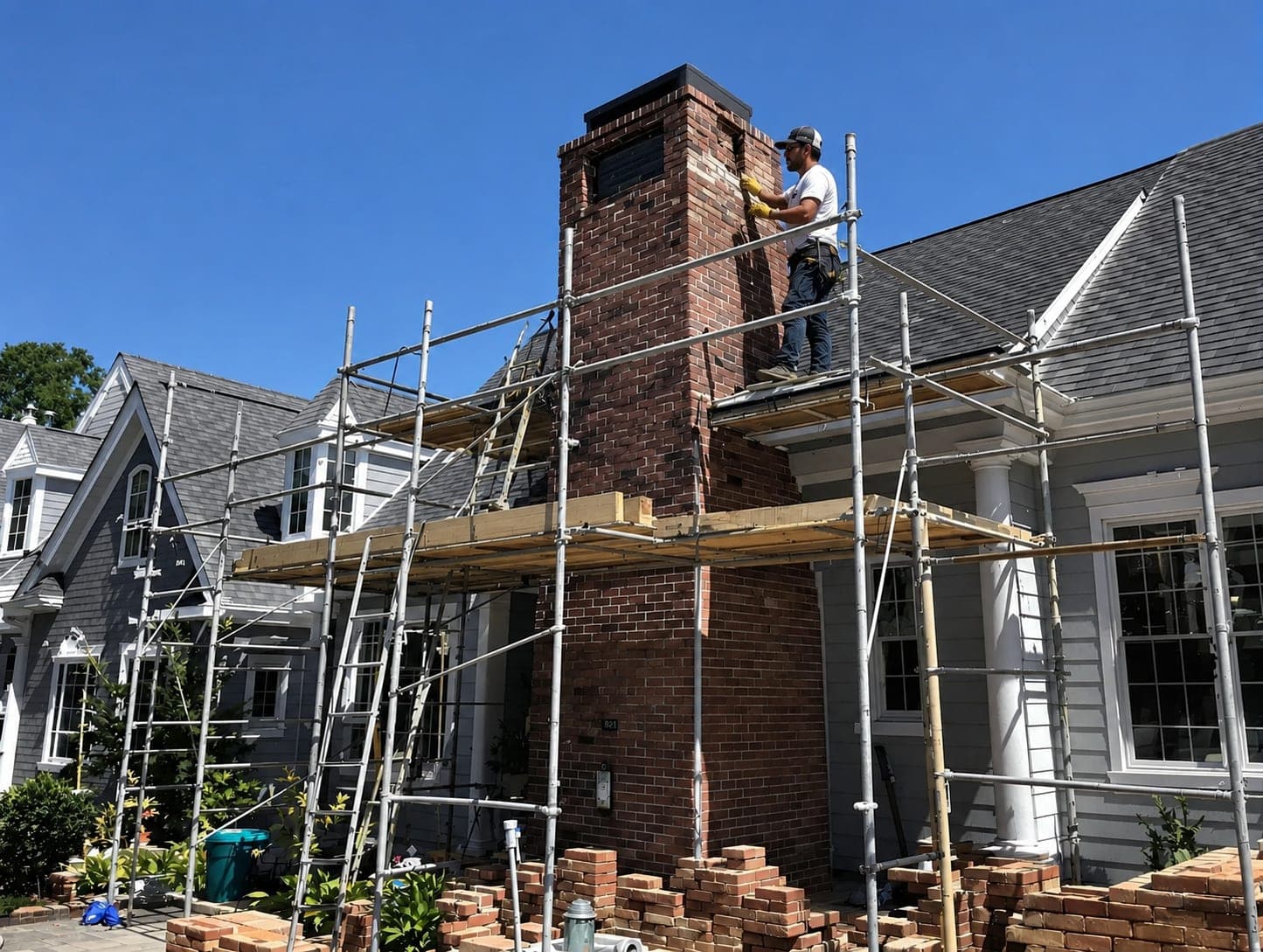
Rebuilding is for a chimney whose brick and mortar can no longer hold together. Common signs are cracks running through the brick, bricks that shift or fall out, or a stack that is no longer plumb. A leaning or damaged chimney is the usual starting point. The first step is finding out whether the chimney needs a rebuild or a smaller fix.
Chimney rebuild in brief
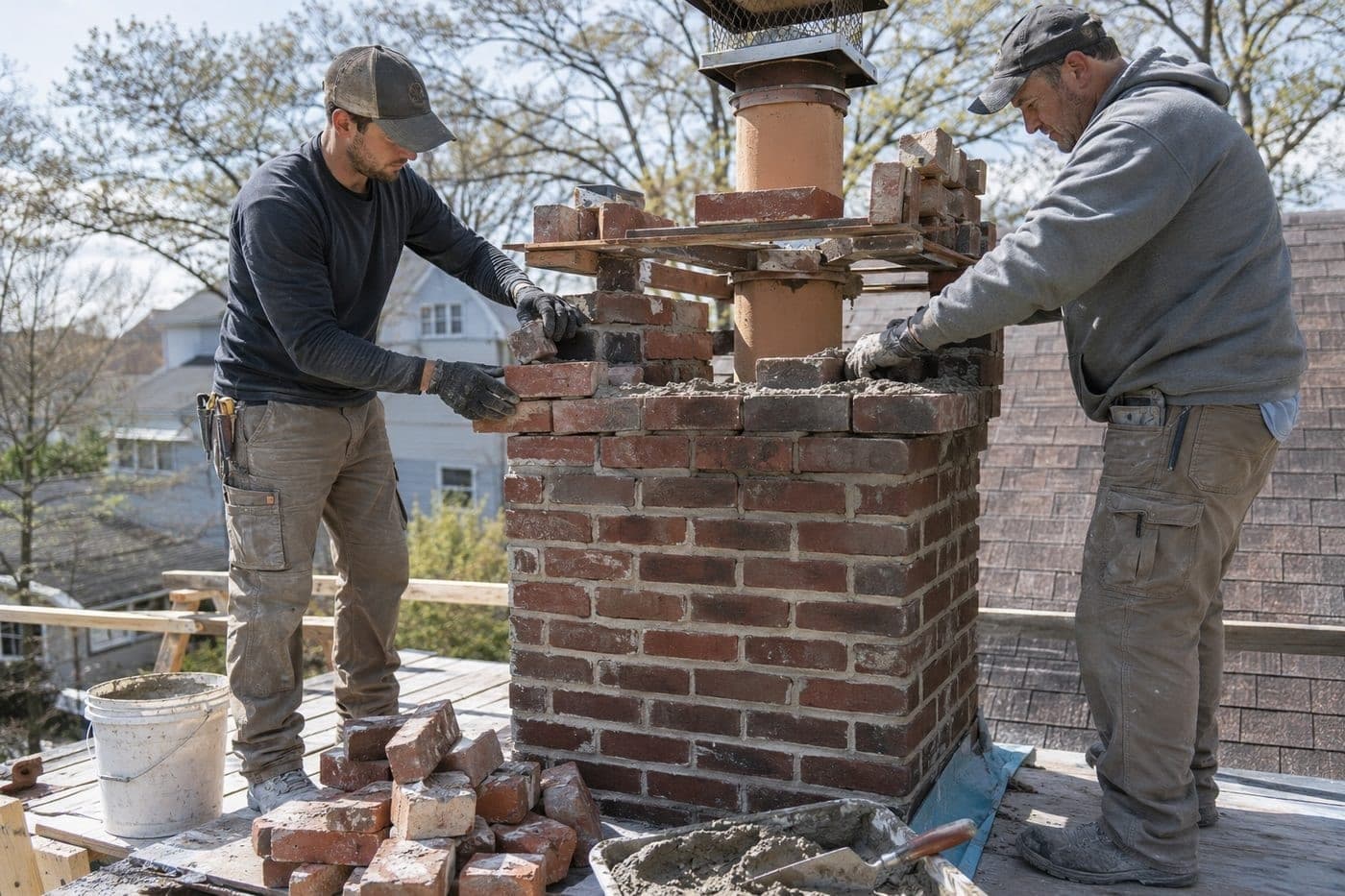
A chimney rebuild takes down the brick and mortar that can't be saved and lays the chimney back up sound. Depending on the damage, that may be only the section above the roofline, or it may go down to solid masonry. Chimney crown rebuilding is part of the job, because a new top needs a new crown to shed water. The flashing and cap are addressed wherever the rebuild disturbs them. For materials, stages and what to expect on site, read how chimney rebuild works.
What Evanston's housing and preservation records mean for a rebuild
Most homes are decades old
According to the CMAP Community Data Snapshot (American Community Survey 2020-2024 five-year estimates), 40.3% of Evanston's housing units were built before 1940 and 29.9% between 1940 and 1969. The median year built is 1953. On a house that age, the chimney may be original. Earlier repairs may also have used brick or mortar that doesn't match. Age alone is not a reason to rebuild. What decides it is whether the brick, mortar and crown are still sound, and how far down any damage goes.
Landmarks inside and outside historic districts
The City of Evanston's Historic Preservation office (Planning & Zoning) reports over 850 registered individual Local Landmarks. About 430 of them are outside a designated Local Historic District. Evanston also has five National Register Historic Districts and four Local Historic Districts, and most of the local districts overlay their National Register counterparts. In practice, a house can be a Local Landmark without being in a historic district, so check both before planning a rebuild.
When a certificate of appropriateness applies
According to the City's Historic Preservation and Building Permits information, a Certificate of Appropriateness from the Historic Preservation Commission is required to alter landmark buildings and properties in historic districts. That requirement applies when a permit is required and the work is visible from the public way (street, alley, sidewalk). A chimney is often visible from at least one of those. On a landmark or historic-district property, the look of the rebuilt chimney becomes part of the plan, not just its structure.
Before a rebuild on a landmark or historic-district home
- Confirm with the City whether the property is a Local Landmark, inside a Local Historic District, or both.
- Note whether the chimney can be seen from the street, the alley or the sidewalk.
- Photograph the chimney's current shape, height, brick pattern and crown so the rebuild can be matched to them.
- Discuss brick and mortar choices that fit the existing appearance before any masonry comes down.
- Allow time for the Historic Preservation Commission step when you plan your schedule.
The codes the City has adopted
Evanston has adopted the 2021 International Residential Code, the 2021 International Mechanical Code and the 2021 International Fuel Gas Code, each with local amendments (source: Building Permits - City of Evanston). The residential code covers masonry chimney construction. If the chimney also vents a gas furnace, water heater or gas fireplace, the mechanical and fuel gas codes come into play too. Gas fireplace and gas appliance work is offered, so the venting side can be planned along with the masonry.
Rebuild or a smaller fix?
| Feature | Rebuild | Smaller masonry fix |
|---|---|---|
| Brick condition | Cracked through, loose, shifting or falling out | Mostly sound, with damage in limited spots |
| Mortar | Failing across large areas, or failing again after earlier patching | Worn joints that can be raked out and refilled |
| Alignment | Stack leaning or out of plumb | Chimney straight and stable |
| Crown | Rebuilt along with the top of the chimney | Cracks can be repaired on their own |
Brick condition
- Rebuild
- Cracked through, loose, shifting or falling out
- Smaller masonry fix
- Mostly sound, with damage in limited spots
Mortar
- Rebuild
- Failing across large areas, or failing again after earlier patching
- Smaller masonry fix
- Worn joints that can be raked out and refilled
Alignment
- Rebuild
- Stack leaning or out of plumb
- Smaller masonry fix
- Chimney straight and stable
Crown
- Rebuild
- Rebuilt along with the top of the chimney
- Smaller masonry fix
- Cracks can be repaired on their own
If the masonry is mostly sound, chimney repair in Evanston may solve the problem without taking anything down. Examples include fixing leaks, resealing flashing or repairing worn joints and a cracked crown. The estimate is where that call gets made.
If the chimney is visibly leaning
Until the chimney has been looked at, stop using the fireplace or stove it serves, and keep people and cars away from the side it leans toward.
Getting started
For the full scope of the work, read about our chimney rebuild service. For the other jobs we handle in this area, browse everything we do in Evanston. Commercial and property-manager work is offered as well.
Sources (3)
The sources of the Evanston facts on this page.
- 1CMAP Community Data Snapshot | Evanston
- 2Historic Preservation - City of Evanston (Planning & Zoning)
- 3Historic Preservation - City of Evanston (Planning & Zoning); Building Permits - City of Evanston