What masonry repair covers
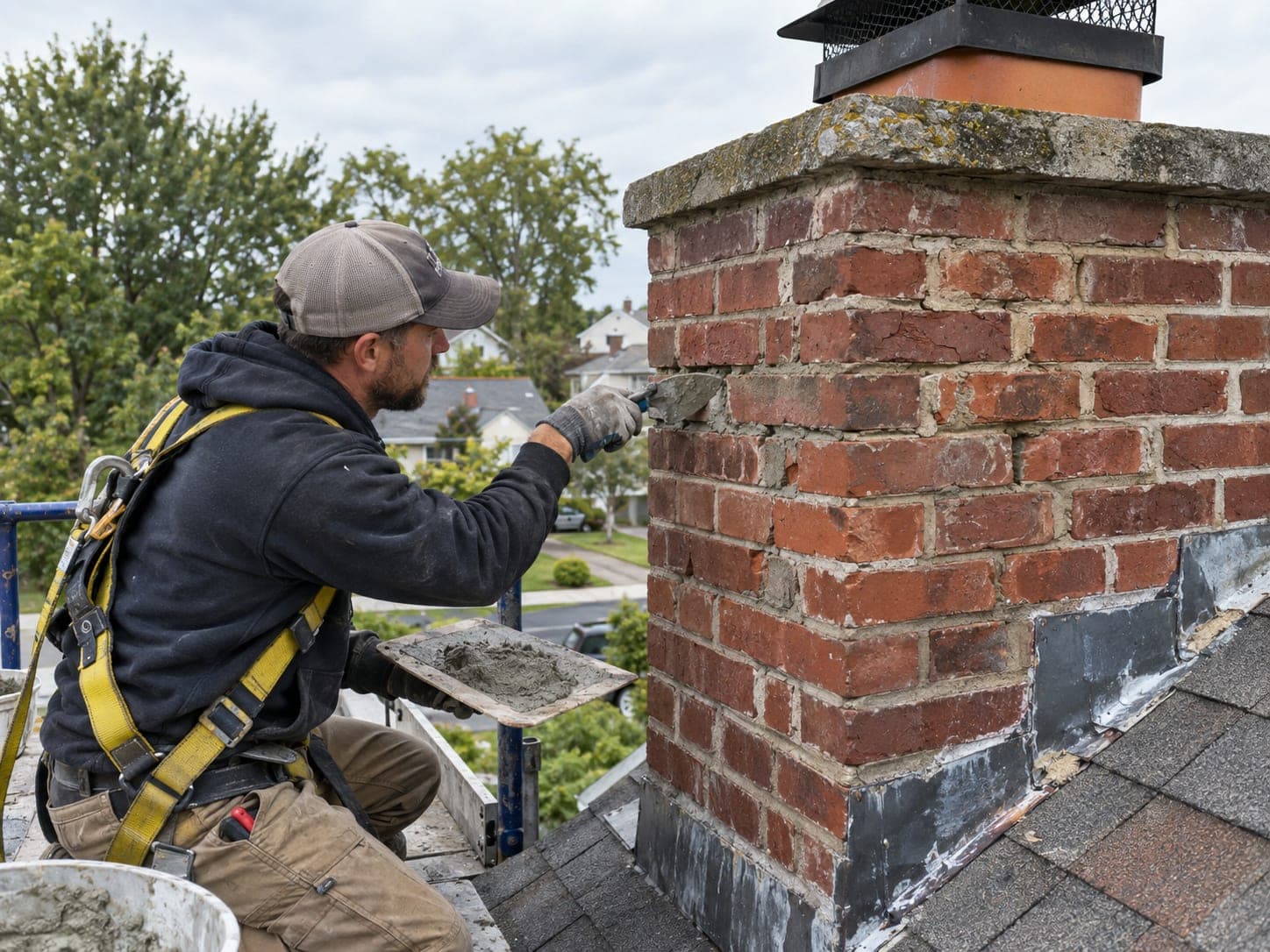
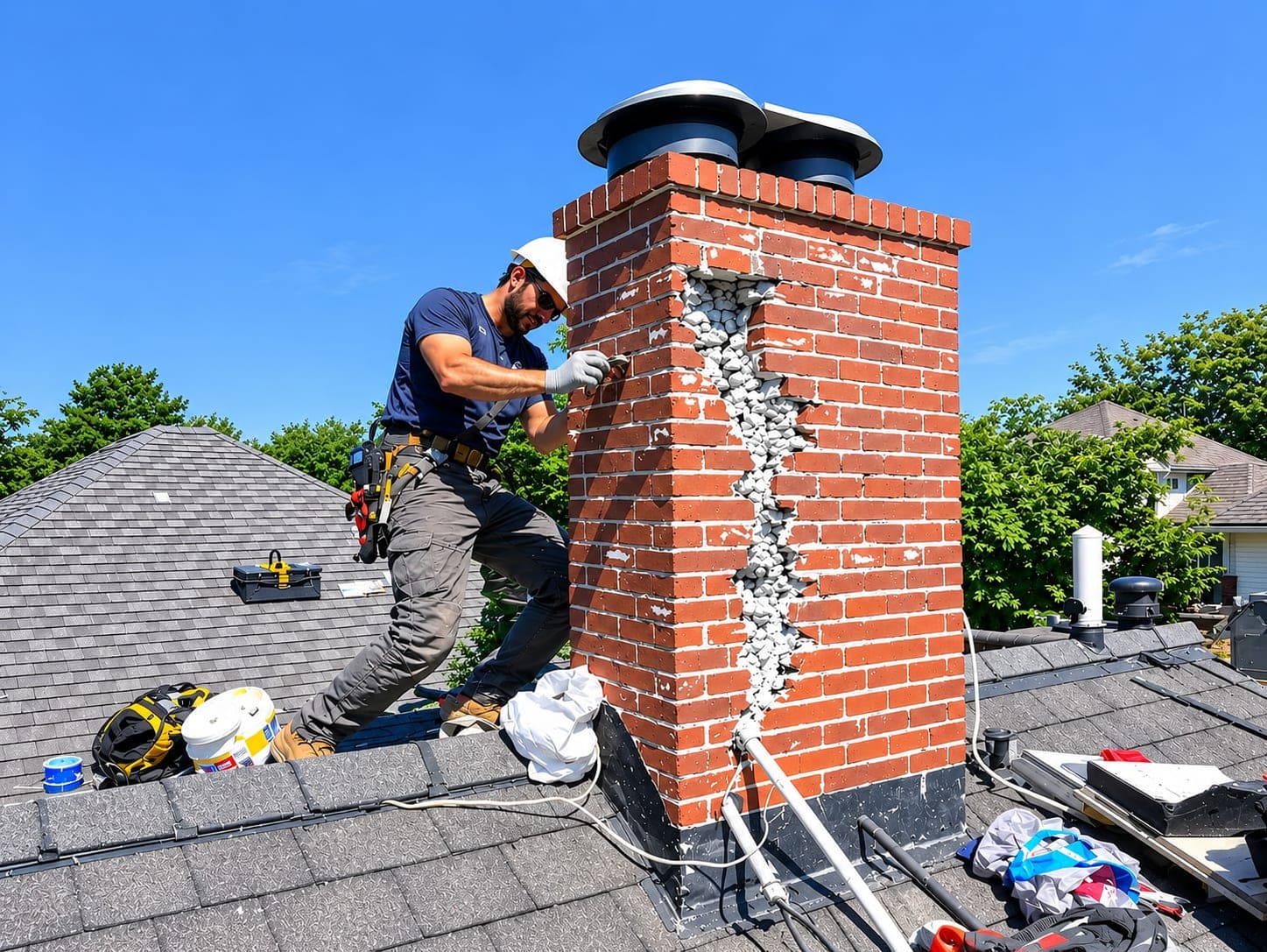
Chimney masonry repair fixes the brick and mortar that make up the chimney stack. That means replacing spalled or cracked bricks, repointing mortar joints that have worn back, and repairing a damaged chimney crown so water runs off instead of soaking into the masonry below. The goal is a stack that sheds water and stays sound, using brick and mortar that match what is already there. For the full process, from the first look at the chimney to the finished joints, read how chimney masonry repair works.
What older housing means for your chimney
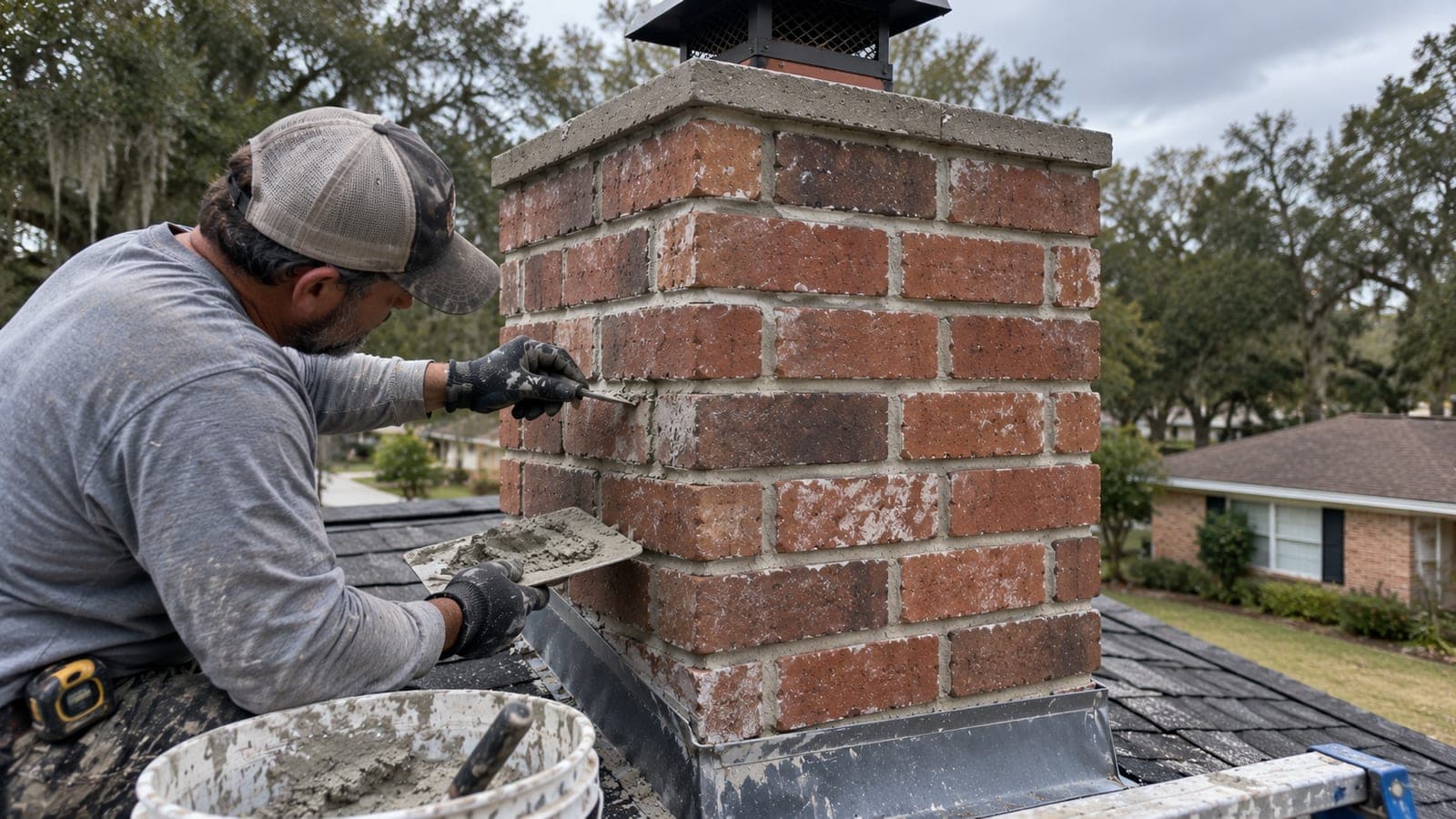
In Evanston, 40.3% of housing units were built before 1940 and 29.9% between 1940 and 1969, and the median year built is 1953 (CMAP Community Data Snapshot, American Community Survey 2020-2024 five-year estimates). If your home falls in one of those groups, the chimney may have decades of weather behind it, and it may have been repointed or patched more than once.
With older masonry in general, the type of repair matters as much as the fact that it gets done. Older brick is often softer than modern brick. If it is repointed with a mortar that is too hard, the brick can crack and flake instead of the joints. Water that gets into open joints and freezes widens cracks each season, so small gaps are best dealt with early.
Things to note before your estimate
- Bricks that are flaking, crumbling or missing their face
- Mortar joints that are recessed, sandy or open
- Cracks in the crown or the top of the chimney
- Staining, white deposits or damp patches on the brick
- Any earlier patch work that does not match the original mortar color
- Whether the home is a designated landmark or sits in a historic district
Landmarks and historic districts
Evanston has over 850 registered individual Local Landmarks, about 430 of which are outside a designated Local Historic District. Evanston also has five National Register Historic Districts and four Local Historic Districts, most of which overlay their National Register counterparts (source: Historic Preservation - City of Evanston, Planning & Zoning).
In practice, a house can be a landmark even if it does not sit inside a historic district. Find out your property's status before any masonry work is scheduled, because that status can affect what has to be filed before work starts.
When a certificate of appropriateness comes into play
In Evanston, a Certificate of Appropriateness from the Historic Preservation Commission is required to alter landmark buildings and properties in historic districts when a permit is required and the work is visible from the public way (street, alley, sidewalk). Evanston treats repair or replacement with no change in design, materials, or general appearance as routine maintenance that does not need an issued Certificate of Appropriateness, but a Certificate of Appropriateness application must still be submitted with the permit submission. Evanston lists "Non-Structural Masonry (for historic properties only)" among its express permit types, and landmark or historic-district properties must still obtain a Certificate of Appropriateness before that work under the Historic Preservation Ordinance (sources: Historic Preservation - City of Evanston, Planning & Zoning; Building Permits - City of Evanston).
For a chimney that can be seen from the street, alley or sidewalk, this changes how the repair is planned. Like-for-like work, with matching brick, mortar color, joint profile and crown shape, keeps the job closest to routine maintenance. A change in materials or appearance moves it toward review. If your home is a landmark or in a historic district, tell us at the estimate. The repair plan can then spell out what will be matched, and you can confirm the filing requirements with the City's historic preservation staff before work begins.
Have this ready if your home is historic
Know whether the property is an individual landmark, inside a Local Historic District, or both, and whether the chimney is visible from the street, alley or sidewalk. Those details decide which part of the City's process applies.
Is masonry repair the right job?
- Brick and mortar damage on the stack: cracked or spalled bricks, worn joints and a cracked crown are what masonry repair is for.
- Problems beyond the brick: leaks at the roofline, a damper that will not close or liner trouble fall under broader chimney repair in Evanston.
- Damage at the very top: if the problem is a rusted or missing cover rather than the masonry under it, read our guide to chimney cap vs chase cover to see which one your chimney has.
- A stack that leans or is coming apart: when too much of the brick has failed to repair in place, rebuilding the chimney from the damaged section up may be the better fix, and the estimate will say so.
If brick or crown pieces have fallen
Keep people away from the area below the chimney and stop using the fireplace until the chimney has been looked at. Loose masonry can keep falling, and cracks can let heat or smoke reach places they shouldn't.
Booking a repair
Same-day visits are available where the schedule allows, emergency calls are accepted, and 24-hour service runs Sunday–Friday. Commercial and property-manager work is offered too. To book, call or request an estimate. For more detail on the work itself, visit our chimney masonry repair service, or browse our other services in Evanston.
Sources (3)
The sources of the Evanston facts on this page.
- 1CMAP Community Data Snapshot | Evanston
- 2Historic Preservation - City of Evanston (Planning & Zoning)
- 3Historic Preservation - City of Evanston (Planning & Zoning); Building Permits - City of Evanston