Gas fireplace installation in brief
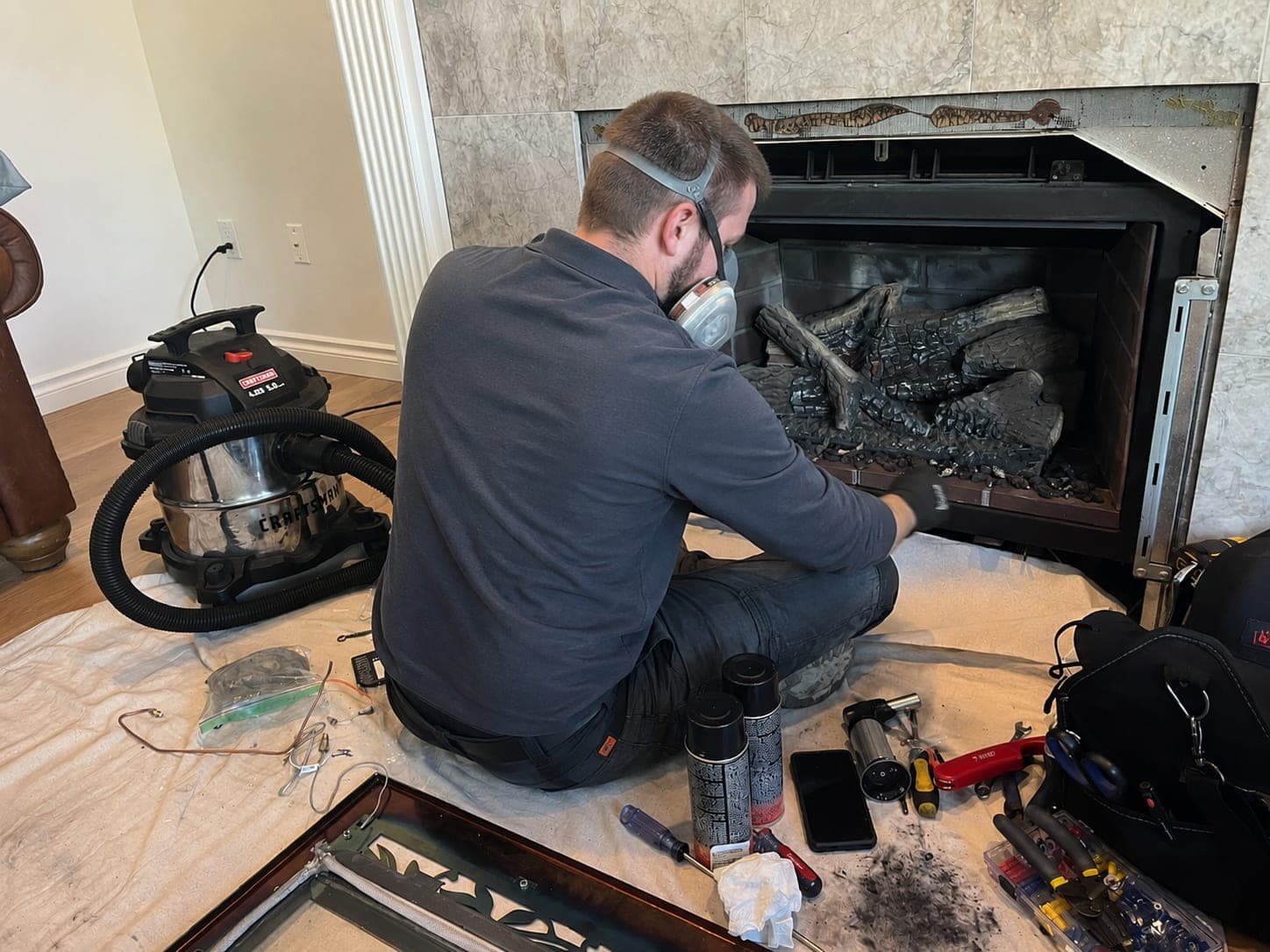
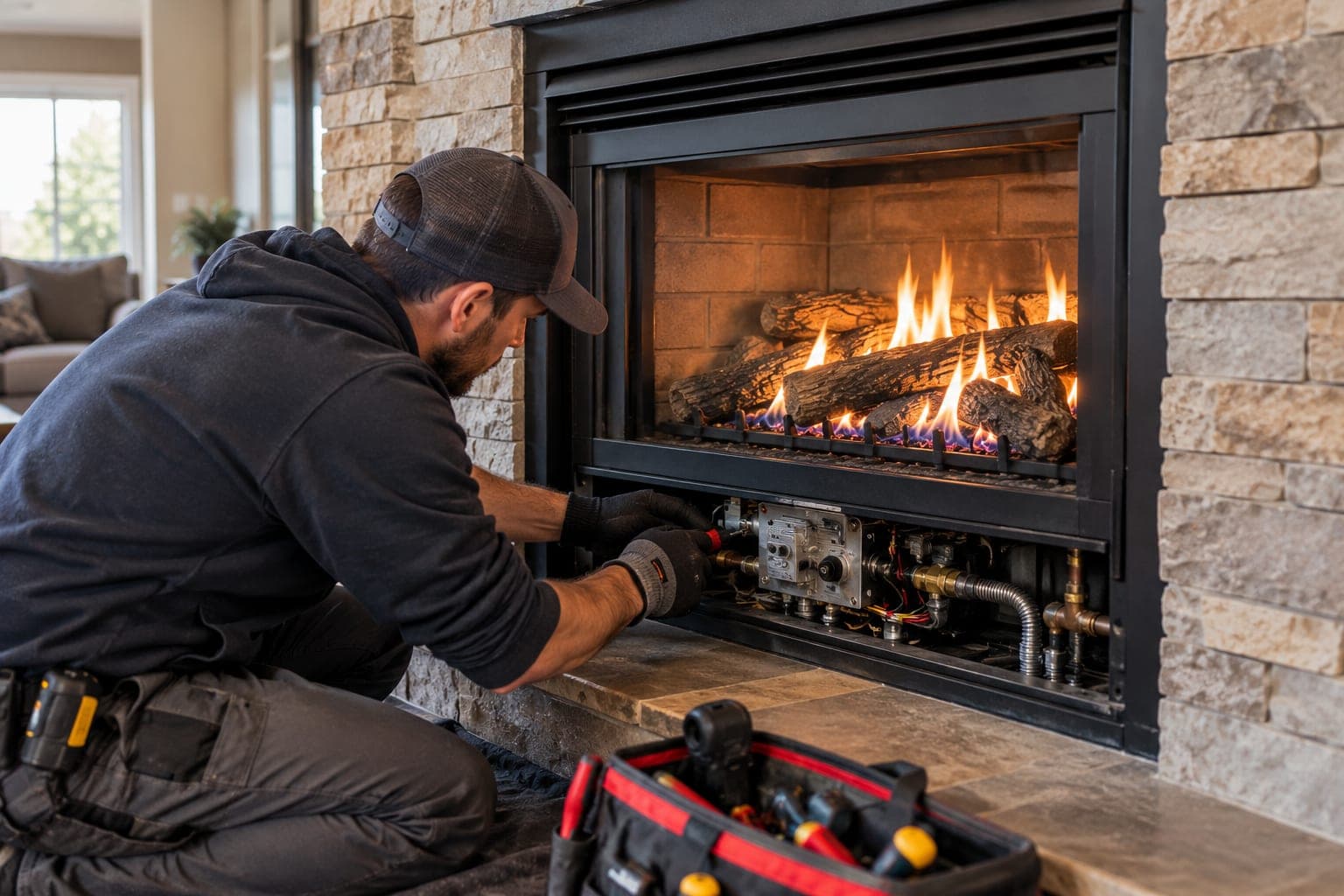
The job starts with choosing a unit that suits the room and the venting route the house allows. Then the fireplace is framed or set, the vent is run to its termination, a gas line is brought to the appliance, and the valve and controls are connected. Before handover, the line is pressure-tested, the burner is lit and adjusted, and you are shown how ignition and shutoff work. Where an existing wood-burning firebox stays in place, a vented gas log set is sometimes the simpler fit. The full scope is on our gas fireplace installation service page.
Wilmette code points that shape the installation
Wilmette has adopted the 2018 International Residential Code, the 2018 International Mechanical Code, and the 2018 International Fuel Gas Code, each as amended (source: Village Codes | Wilmette, IL). The amendments below change how a gas fireplace is vented, piped and inspected.
How high the vent terminal has to sit
Wilmette's mechanical code amendment (Section 804.1, Ordinance 2024-O-33) sets the anticipated snow level at 18 inches for direct-vent terminals that must sit above average snow level (source: Village of Wilmette, Ordinance No. 2024-O-33, Mechanical Code Section 804.1 Direct-vent terminations). For a direct-vent fireplace, that figure turns into a measurement during planning. A terminal covered by the rule has to exit the wall above that height, which can affect whether a fireplace on a low wall or a lower level can vent straight out, or whether the vent has to rise before it turns outside.
If you are still choosing a unit type, our guide to direct vent vs ventless gas fireplaces explains how the two differ before the vent route is settled.
The gas line and its pressure test
Wilmette's residential code amendments (Ordinance 2024-O-33, Section G2417.4) require new gas piping to be pressure-tested with air or inert gas at not less than 20 psi, held for at least 10 minutes. Wilmette's fuel gas code amendments (Ordinance 2024-O-33) also bar steel, stainless steel and wrought-iron gas pipe underground and require such pipe to be at least standard weight (Schedule 40) (source: Village of Wilmette, Amendments to the Model Codes, Ordinance 2024-O-33, approved June 11, 2024).
For you, this means a new line to the fireplace gets a pressure test before it goes into service. Any route that would put steel pipe below ground has to be planned another way, and steel pipe used elsewhere must be at least Schedule 40.
The mechanical rough inspection
The Village of Wilmette's list of common building inspections includes a mechanical rough inspection, for which the contractor should be on site (source: Village of Wilmette, Building Inspections). Rough inspections generally take place before finished surfaces cover the work, so the schedule should leave room for that visit before walls or a surround are closed up.
How a gas fireplace installation comes together
Estimate and unit choice
We look at the room, where the vent could exit and how far the gas supply has to travel, then help you choose a unit.
Vent and gas route
The terminal location is checked against the 18-inch anticipated snow level where that rule applies, and the gas route is planned around the underground pipe limits.
Installation
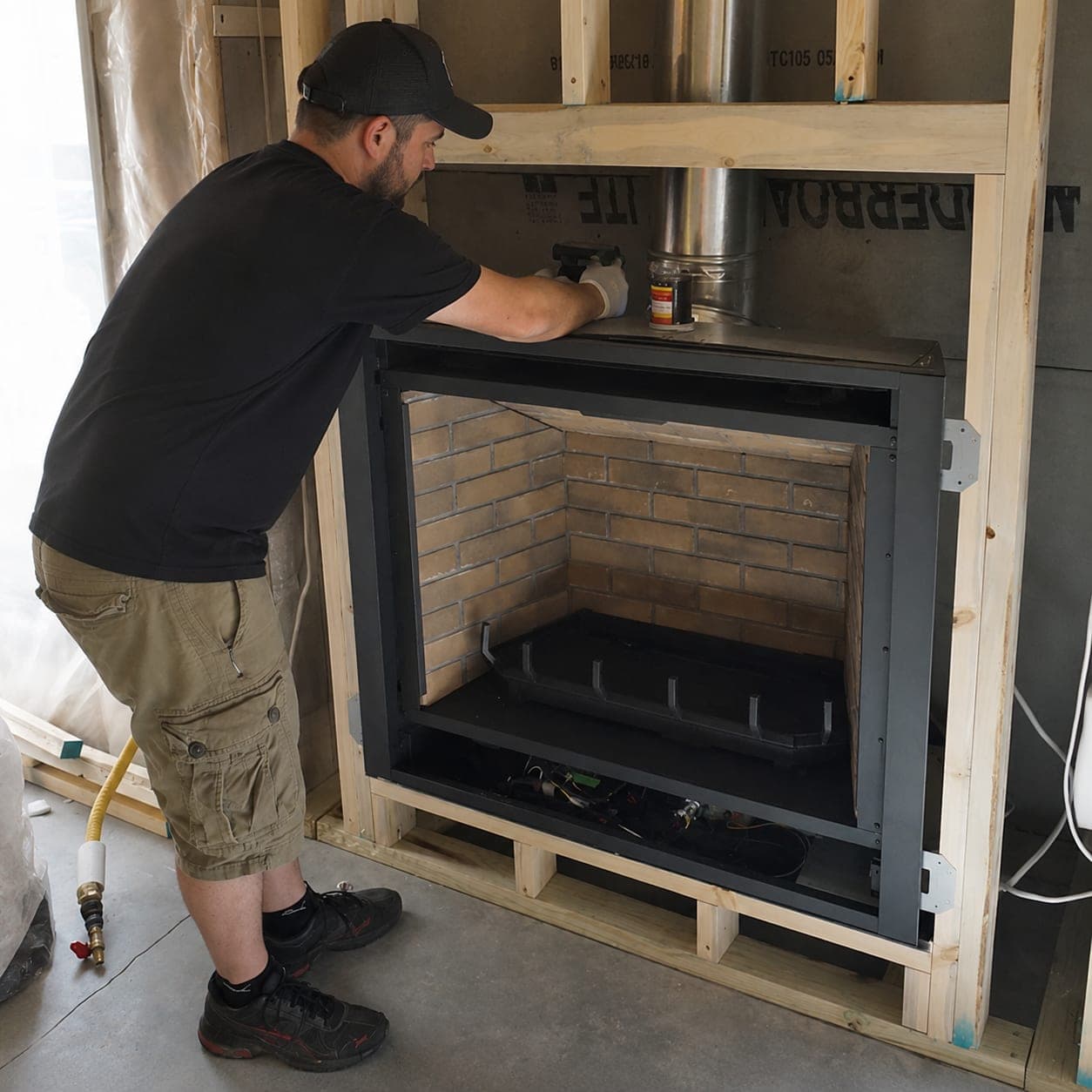
The fireplace is set, the vent is run and the gas line is brought to the valve.
Pressure test and rough inspection
New piping is tested at not less than 20 psi for at least 10 minutes, and the mechanical rough inspection is scheduled while the work is still open.
Finish and start-up
Once the work is enclosed, the burner is lit and adjusted and you are shown how the controls work.
When a different job fits better
Gas fireplace installation fits when you want a new gas appliance where none exists, or a full replacement of an old unit. If you would rather burn wood, or you are planning a new hearth from the ground up, fireplace installation for homes in Wilmette covers that work. If you already have a sound masonry fireplace and only want gas flame, a gas log set or a fireplace insert may suit you better than a new fireplace. We can talk through both options at the estimate.
Booking your estimate
Estimates are free. We work on all major fireplace brands. To learn more, read how gas fireplace installation works, or browse everything we handle in Wilmette. When you are ready, call or request an estimate.
Sources (2)
The sources of the Wilmette facts on this page.
- 1Village of Wilmette - Ordinance No. 2024-O-33 amending the Village Code, Mechanical Code Section 804.1 Direct-vent terminations
- 2Village Codes | Wilmette, IL; Village of Wilmette - Ordinance No. 2024-O-33 amending the Village Code (model building, residential and related codes), approved June 11, 2024; Village of Wilmette - Building Inspections; Village of Wilmette - Amendments to the Model Codes (Ordinance 2024-O-33)