What Wilmette's housing and preservation records mean for chimney repairs
Two sets of public records shape how a chimney masonry repair in Wilmette gets planned: the age of the village's housing, and the rules that apply to its protected historic properties.
Housing age and masonry wear
In Wilmette, 28.6% of housing units were built before 1940 and 45.2% between 1940 and 1969; the median year built is 1957 (CMAP Community Data Snapshot, American Community Survey 2020-2024 five-year estimates). Together, that puts 73.8% of the village's housing units before 1970.
Those figures describe housing across the village, not any one house. If yours falls in those age groups, its chimney has weathered for decades, and that alone is reason to have the masonry checked rather than assumed sound. On any older masonry chimney, mortar joints usually wear out before the brick does, crowns crack as they age, and water that gets past either one works its way into the stack.
Local landmarks need a certificate of appropriateness first
Wilmette has 38 Local Landmarks protected by its Historic Preservation Ordinance (source: Local Landmarks & National Register Properties, Village of Wilmette). If your home is one of them, a Certificate of Appropriateness from the Historic Preservation Commission is required before beginning exterior work, even when no building permit is required. There is no fee for it (source: Village of Wilmette, What is a Certificate of Appropriateness PDF). Chimney masonry is exterior work, so the certificate comes before the scaffolding.
How the request is reviewed depends on what the repair does. The Village's historic preservation planner may issue a Certificate of Appropriateness at staff level for in-kind repairs, maintenance, and replacement of existing features and architectural details on Local Landmarks. The Historic Preservation Commission Handbook says all alterations to a local landmark must be reviewed by the full Commission rather than by staff or a subcommittee (source: Historic Preservation Commission Handbook, 3.3 Review by Commission or Subcommittee).
| Feature | In-kind repair or maintenance | Alteration |
|---|---|---|
| What it covers | Repairs, maintenance, and replacement of existing features and architectural details | Changes to the landmark |
| Who may issue or review | The historic preservation planner, at staff level | The full Historic Preservation Commission |
| Certificate fee | None | None |
What it covers
- In-kind repair or maintenance
- Repairs, maintenance, and replacement of existing features and architectural details
- Alteration
- Changes to the landmark
Who may issue or review
- In-kind repair or maintenance
- The historic preservation planner, at staff level
- Alteration
- The full Historic Preservation Commission
Certificate fee
- In-kind repair or maintenance
- None
- Alteration
- None
Whether a particular chimney job counts as in-kind or as an alteration is the Village's call, so confirm it with the historic preservation planner before scheduling. A written estimate that spells out the materials and scope gives you a clear description of the work to take to that conversation.
Planning masonry repair on a Local Landmark home
Confirm the home's status
Check whether the house is one of Wilmette's 38 Local Landmarks, not only part of a National Register listing.
Get the scope in writing
Request an estimate that describes which brick, mortar or crown work is needed and what materials will be used.
Obtain the certificate
Bring that description to the Village and get the Certificate of Appropriateness before any exterior work starts.
Schedule the repair
Book the masonry work once the certificate is in hand.
National register listing is a different thing
Wilmette also has 3 National Register Historic Districts (Village Center, Oak Circle, Ouilmette North) and 9 individual National Register properties. The Village notes that National Register listing is honorific and does not protect properties from alterations (source: Local Landmarks & National Register Properties, Village of Wilmette). The certificate requirement described above is written for Local Landmarks, so a National Register listing by itself does not tell you whether your chimney repair needs one; check the Local Landmark list too.
Chimney masonry repair in brief
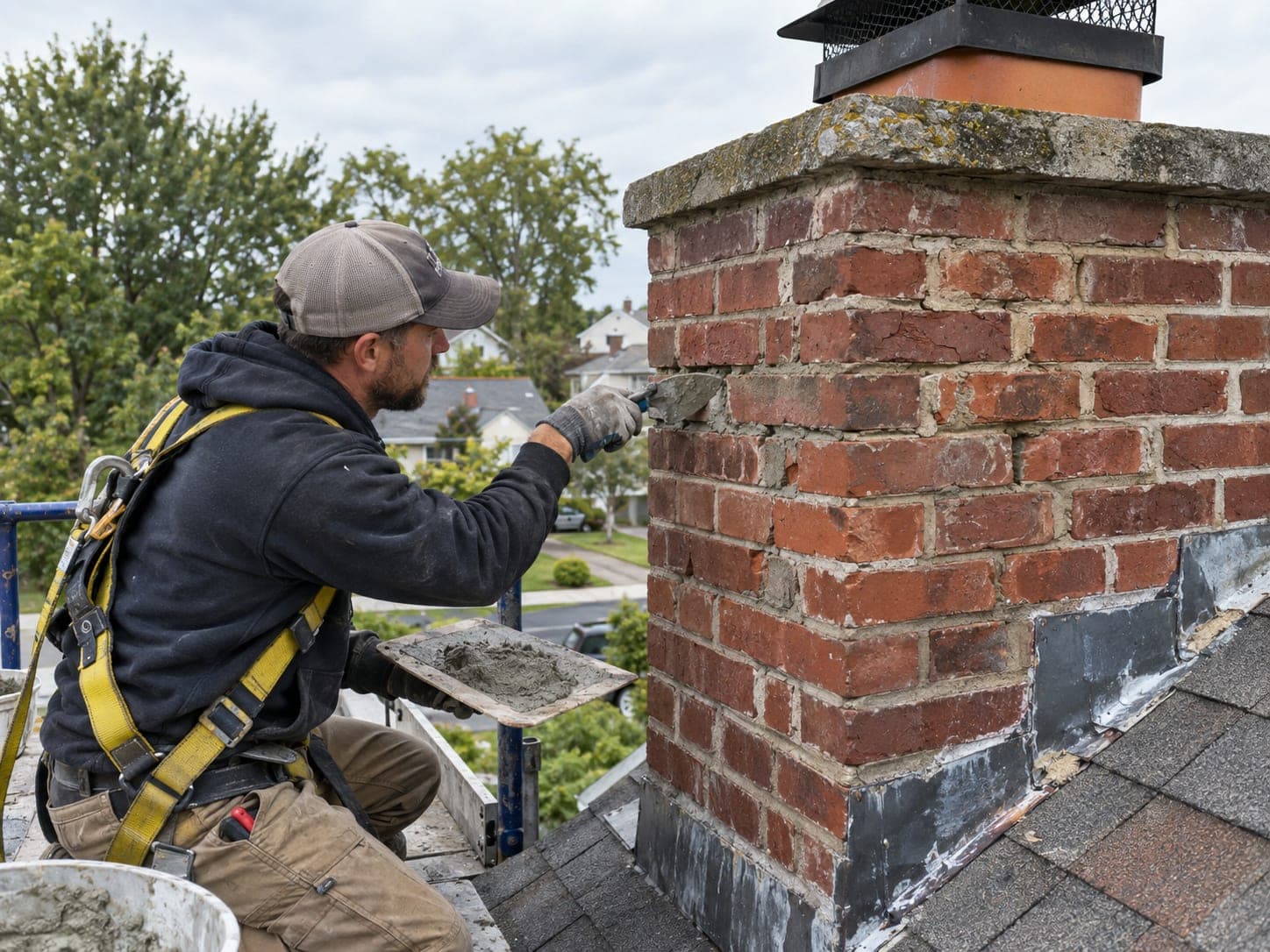
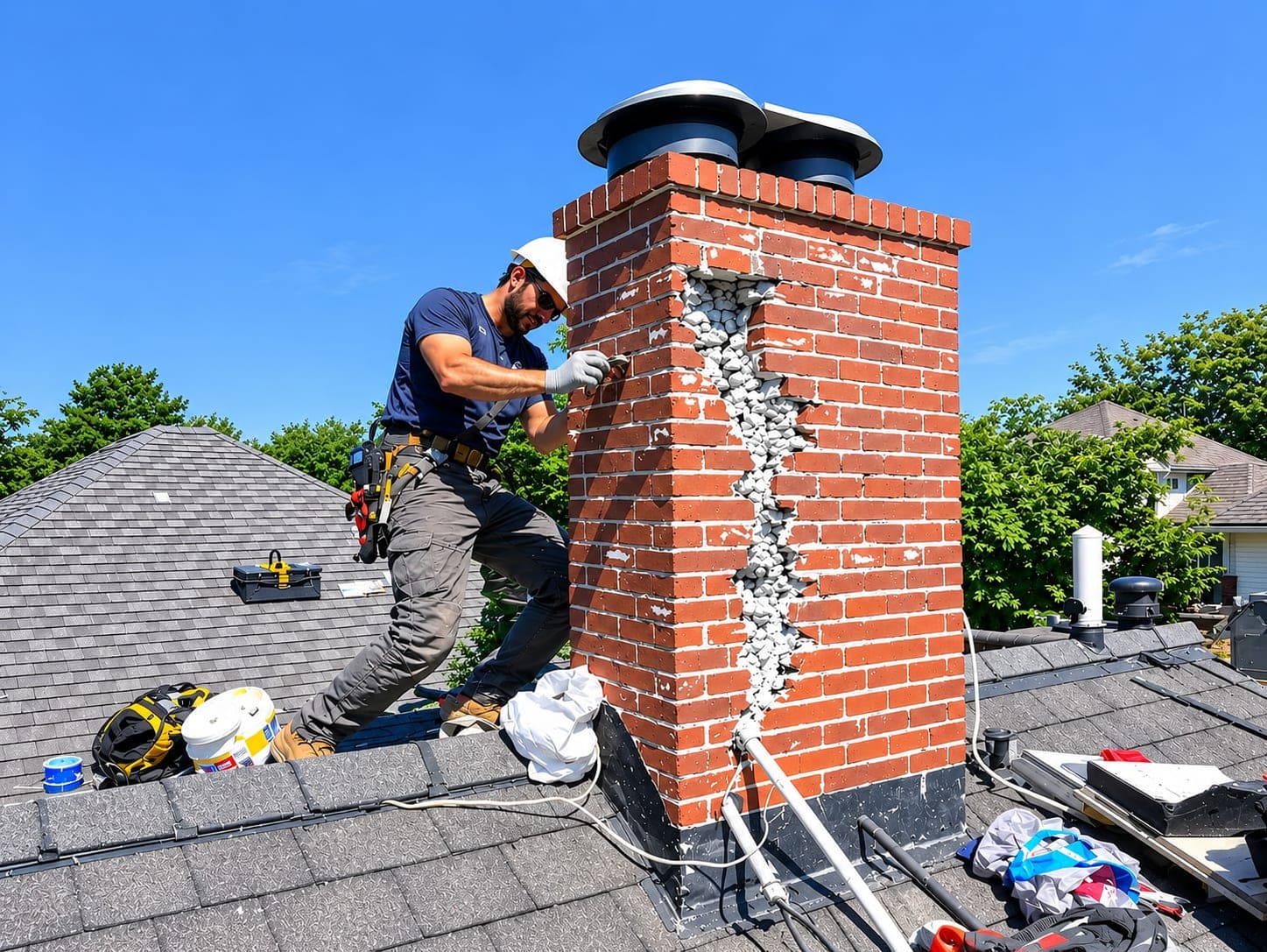
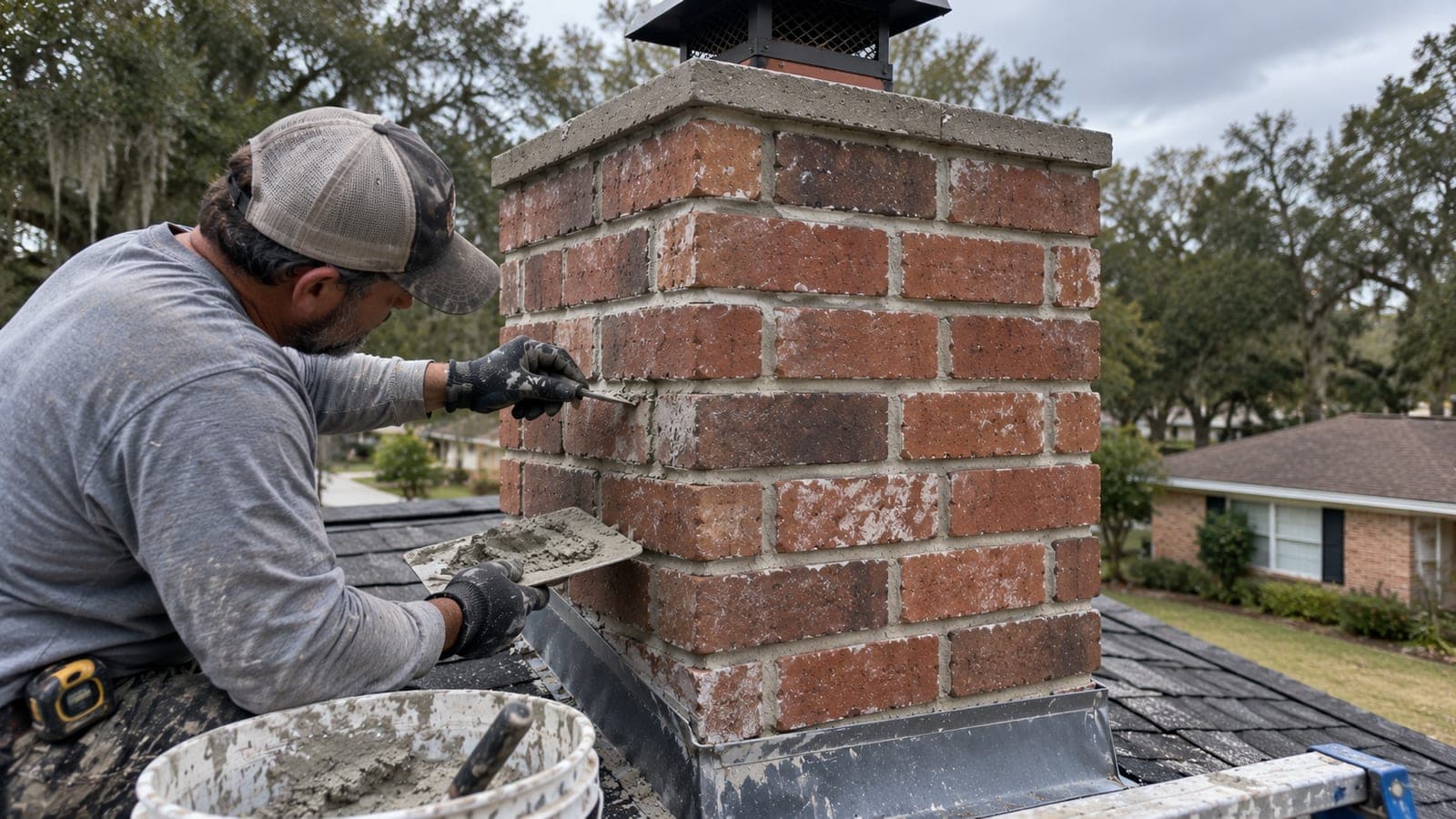
Chimney masonry repair covers the brick, stone and mortar of a chimney stack: replacing spalled or loose brick, tuckpointing eroded joints, repairing a cracked or damaged chimney crown, and resetting deteriorated sections so the chimney sheds water again. When a stack is too far gone for patching, a partial or full rebuild can be the better answer. The full scope of the work is laid out on our chimney masonry repair service page.
Is masonry repair the right job for your chimney?
Masonry repair fits when the brick, mortar or crown itself is failing. Some chimney damage points to a different repair:
- Cracked or crumbling crown: crown repair, often handled together with nearby masonry work.
- Mortar washing out of the joints with sound brick: tuckpointing may be all the stack needs.
- Leaning stack or brick that is loose throughout: a rebuild of the affected section is usually more sensible than patching.
- Damaged chimney cap: cap replacement rather than masonry work; if you aren't sure which part you have, start with the difference between a chimney cap and a chase cover.
- Water showing up where the chimney meets the roof: flashing or leak repair, sometimes alongside waterproofing.
If you're weighing a new fireplace rather than repairing an old one, read about fireplace installation for Wilmette homes.
Booking chimney masonry repair in Wilmette
Commercial and property-manager work is offered as well. For details on the repair itself, read how chimney masonry repair works, and for everything else we handle in the village, browse all of our services in Wilmette. Request an estimate to get started.
Sources (3)
The sources of the Wilmette facts on this page.
- 1CMAP Community Data Snapshot | Wilmette
- 2Local Landmarks & National Register Properties | Wilmette, IL
- 3Applying for a Certificate of Appropriateness (Village of Wilmette, What is a Certificate of Appropriateness PDF); Village of Wilmette - Historic Preservation Commission Handbook, 3.3 Review by Commission or Subcommittee