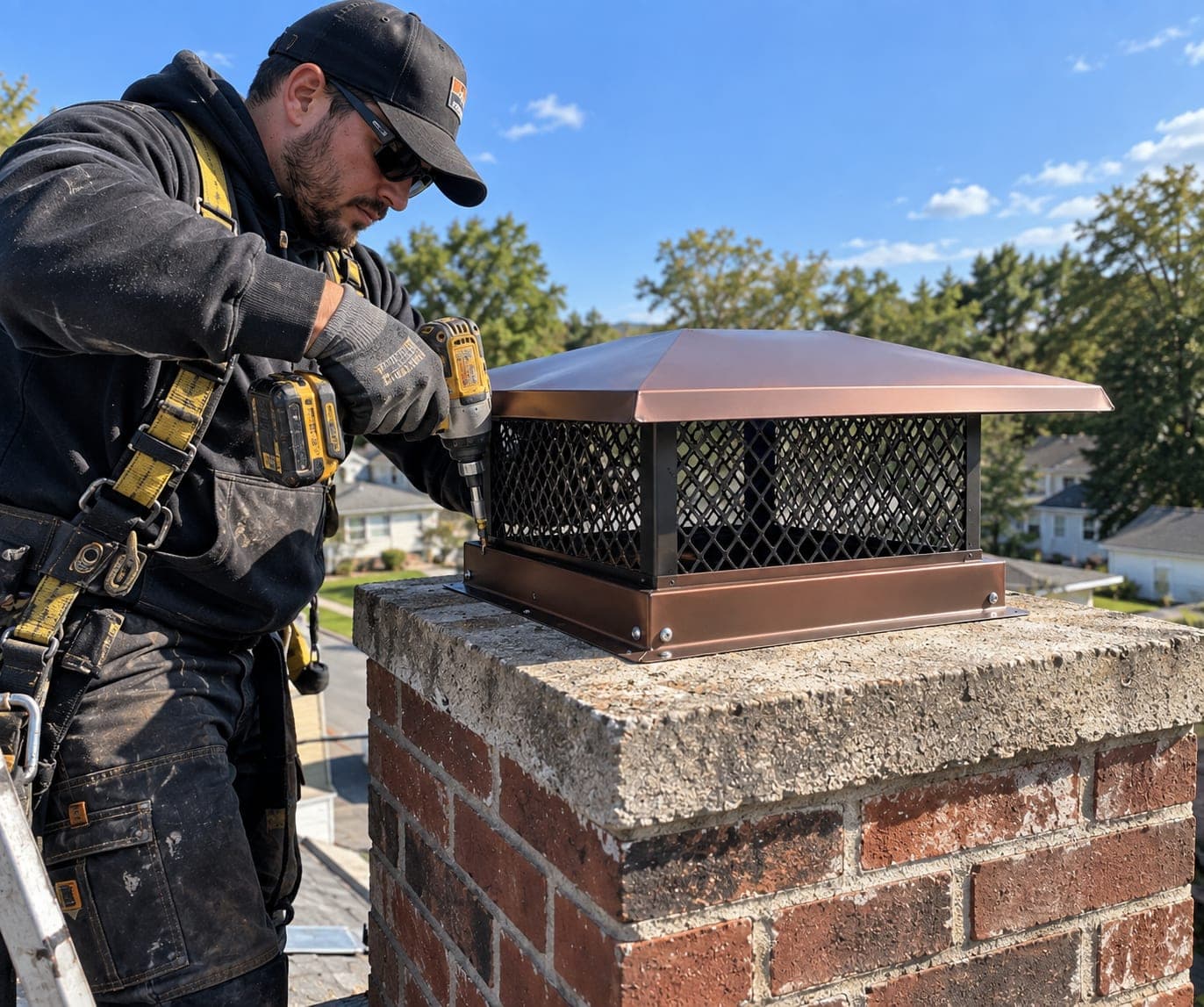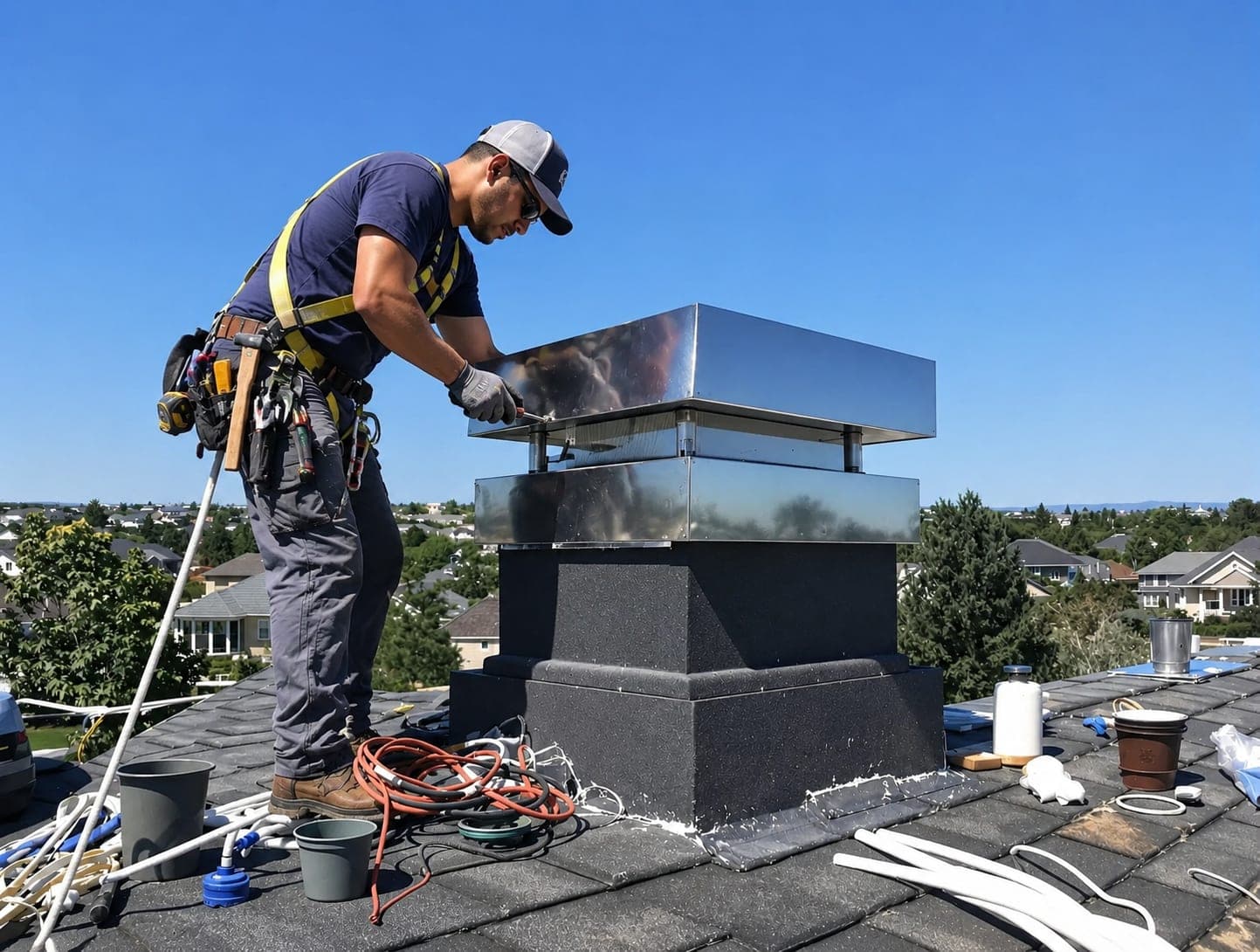
Chimney cap installation in brief
We start by measuring the top of the flue and the crown. Then we choose a cap that fits the flue's size and shape and fasten it securely to the chimney. Mesh sides keep birds and small animals from building a chimney nest inside, and the solid top sheds rain and keeps leaves out. Before anything is fitted, we check the flue opening for blockages or old nesting material. For materials, styles and the full process, read about how our chimney cap installation works.
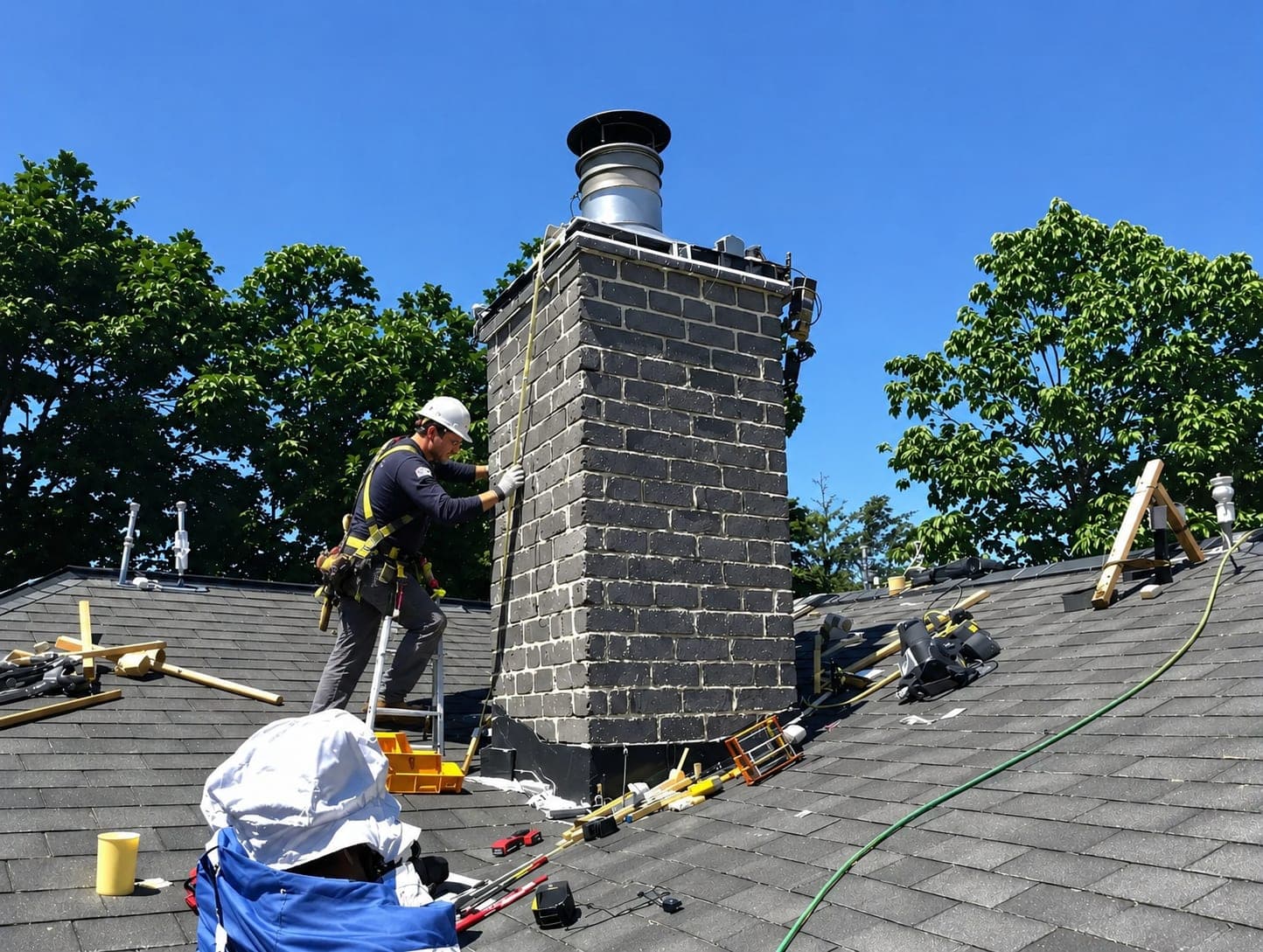
Local landmark homes: the certificate of appropriateness comes first
According to the Village of Wilmette's guidance on applying for a Certificate of Appropriateness: In Wilmette, a Certificate of Appropriateness from the Historic Preservation Commission is required before beginning exterior work on a Wilmette Local Landmark, even when no building permit is required.
A chimney cap sits on top of the chimney, so installing one is exterior work. This rule applies only to homes that are Wilmette Local Landmarks. If your house is one, the certificate needs to be in hand before installation day, whether or not the job also needs a building permit.
How this fits into scheduling your cap
Confirm your home's status
Check with the Village whether your house is a Wilmette Local Landmark. If it isn't, this step doesn't apply to you.
Get an estimate
We measure the flue and crown and recommend a cap, so you know exactly what work is planned.
Obtain the certificate
For a Local Landmark, get the Certificate of Appropriateness from the Historic Preservation Commission before any exterior work begins. There is no fee for it.
Install the cap
Once the certificate has been issued, we schedule the visit and fit the cap.
Same-day work and landmark homes
On a Local Landmark, installation still waits until the certificate has been issued.
When a cap is the right job, and when something else fits better
- No cap at all: a new cap is the right job. If birds or animals are already living in the flue, we remove the nest and the animal first, then fit the cap.
- A bent, rusted or loose cap: replacing the existing cap usually makes more sense than adding a second one.
- A metal chimney boxed in siding: the top may need a chase cover rather than a cap, or both. Our guide to chimney cap vs chase cover explains the difference.
- A cracked or crumbling crown: the crown should be repaired before a cap is fastened to it.
- Sparks or embers from a wood-burning fireplace: a cap with a spark arrestor screen may be the better fit.
Other fireplace work in Wilmette
If the cap is part of a larger project, such as adding a new hearth or replacing an old unit, look at our fireplace installation for homes in Wilmette. On a Local Landmark, the Certificate of Appropriateness requirement applies to any exterior part of that project too.
Request an estimate
Estimates are free. Get in touch to arrange a visit. For more about the work itself, read about our chimney cap installation service, and for everything else we handle locally, visit our services for homes in Wilmette page.
Sources (1)
The sources of the Wilmette facts on this page.
- 1Applying for a Certificate of Appropriateness (Village of Wilmette, What is a Certificate of Appropriateness PDF)