Chimney masonry repair in brief
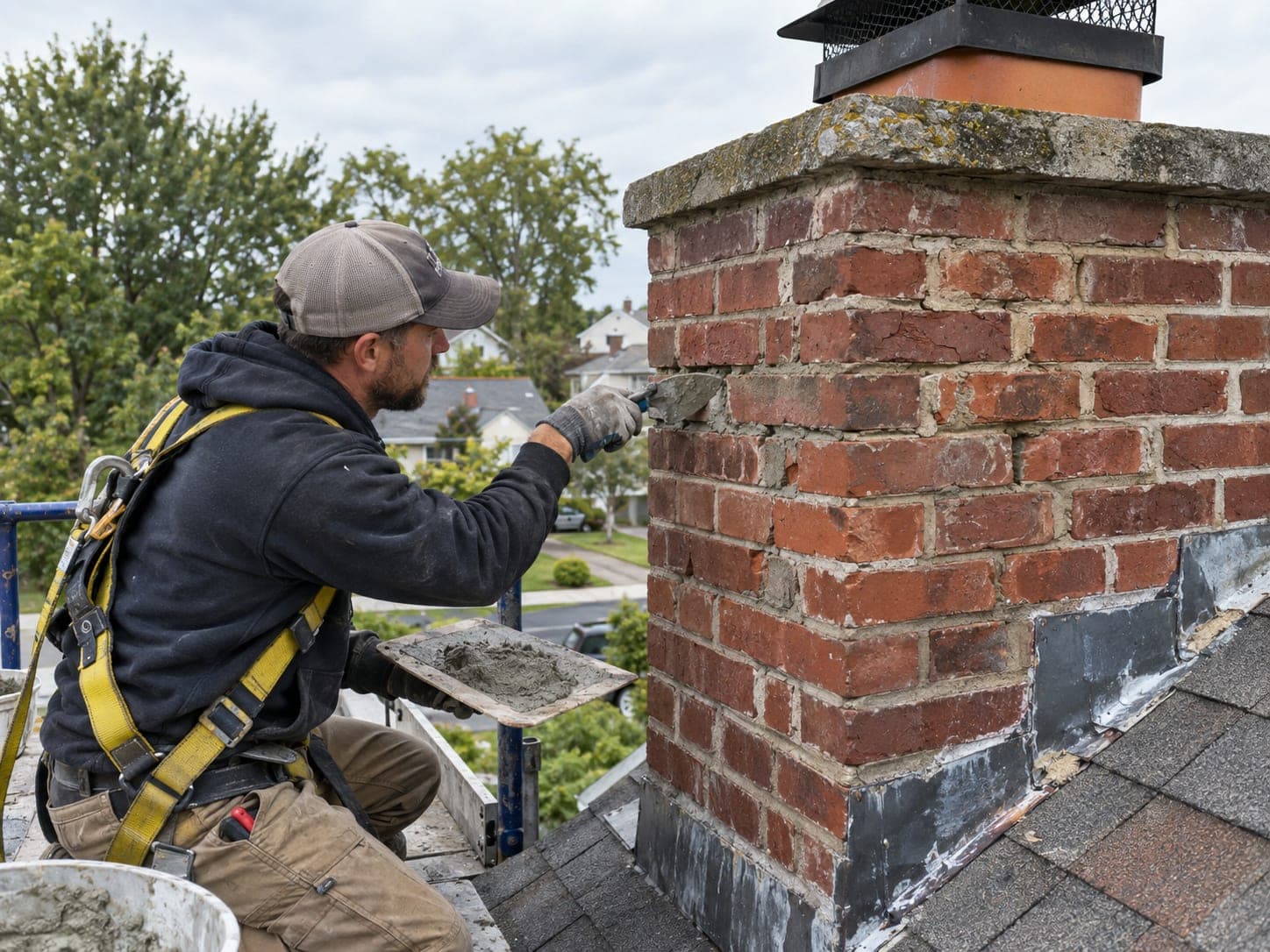
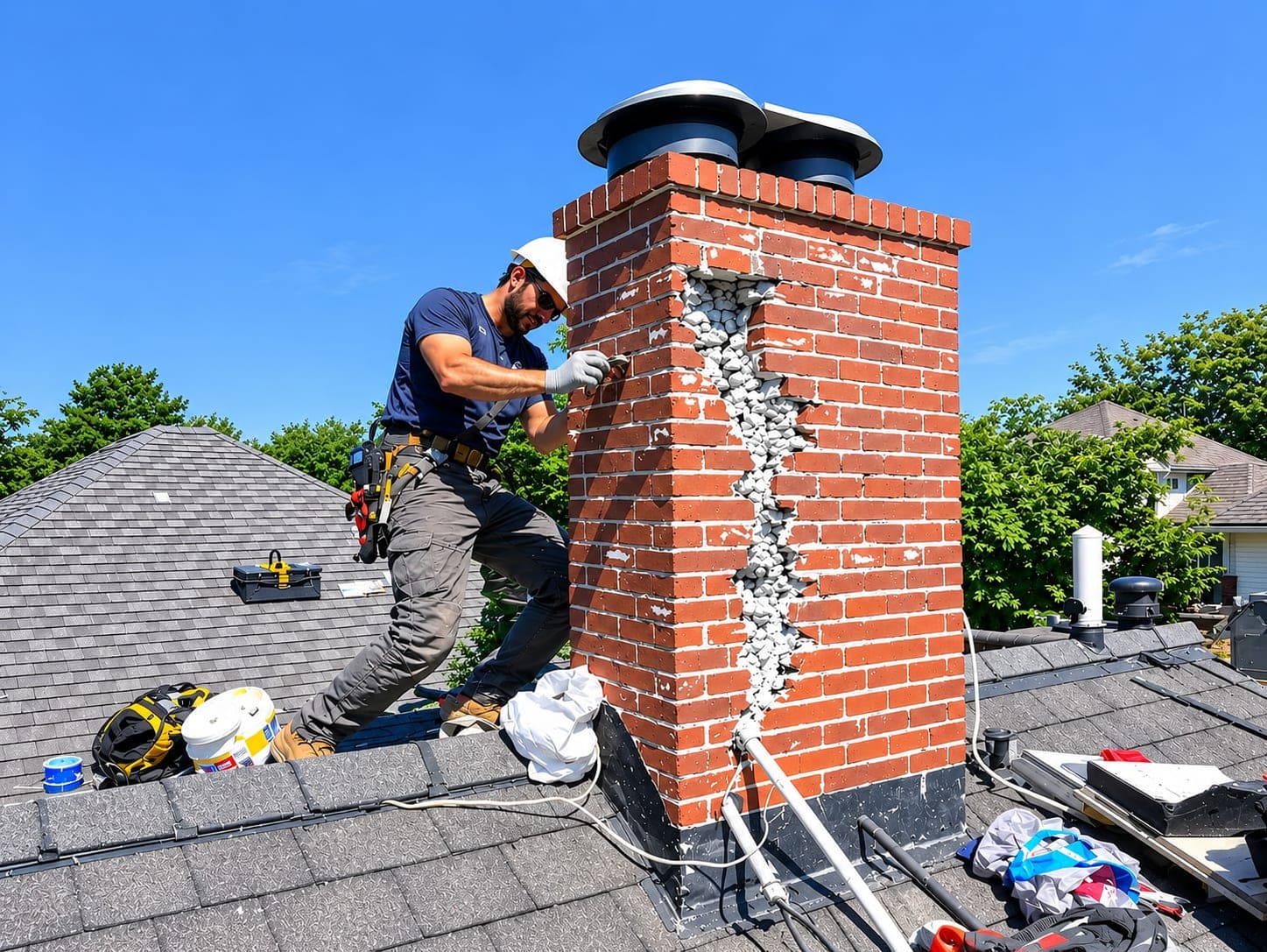
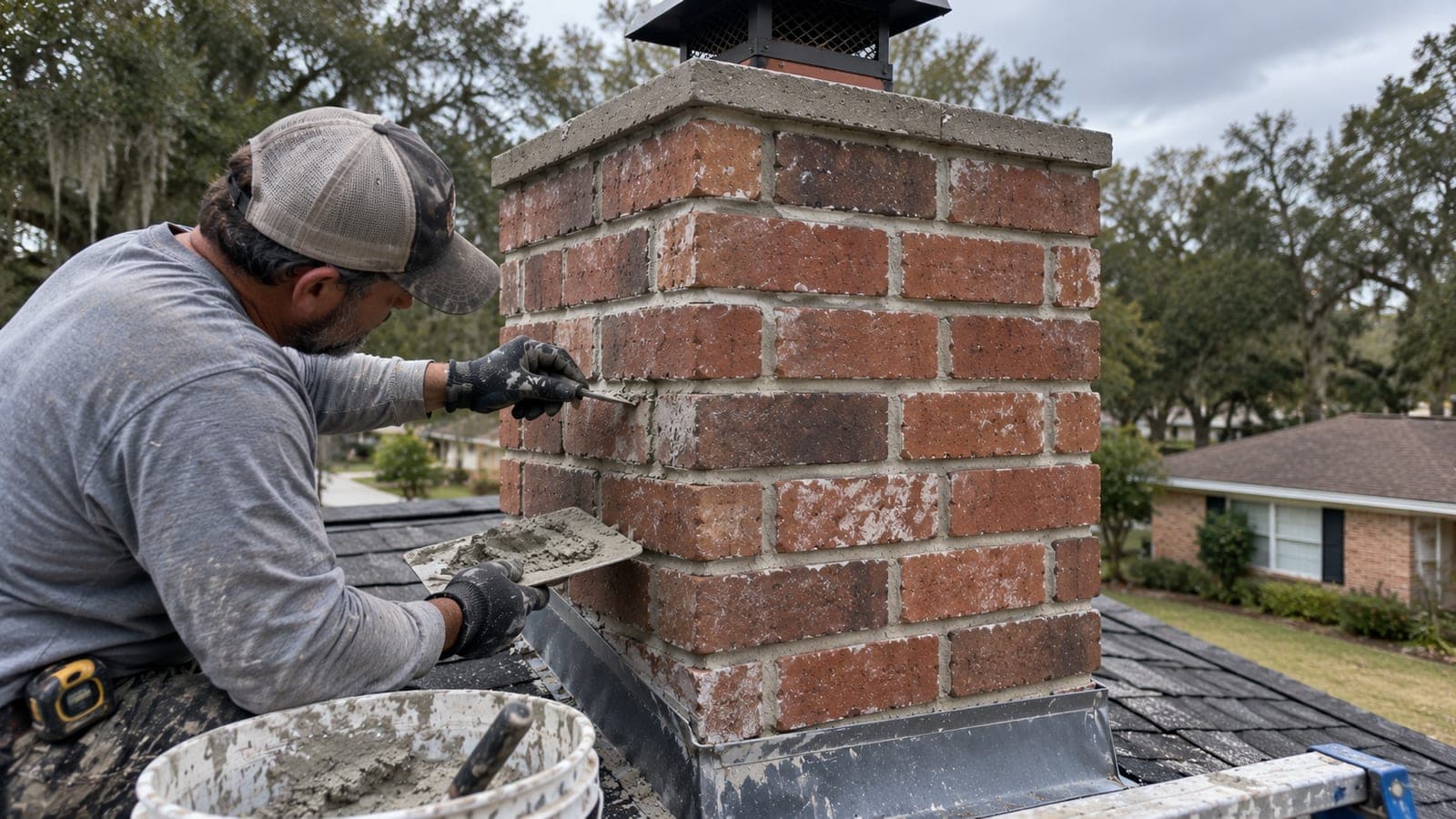
Chimney masonry repair covers the brick and mortar of the stack. The work includes three main jobs. Open or crumbling mortar joints are repointed. Spalled or loose brick is replaced. A cracked or damaged chimney crown is repaired so water stops soaking into the masonry below it. Masonry repair doesn't include a metal cap, a flue liner or the firebox inside the house. For the full scope, the materials and how a visit runs, read how chimney masonry repair works.
What affects chimney masonry repair in Oak Park
- In Oak Park, 59.3% of housing units were built before 1940 and 19.9% between 1940 and 1969; the median year built is 1938 (CMAP Community Data Snapshot, American Community Survey 2020-2024 five-year estimates). Source: CMAP Community Data Snapshot | Oak Park.
- Oak Park has three historic districts (Ridgeland/Oak Park, Frank Lloyd Wright-Prairie School of Architecture, and Gunderson) that together cover approximately a third of the Village and are locally designated and listed on the National Register of Historic Places. Oak Park has more than 70 locally designated historic landmarks, in addition to 11 buildings and one park listed on the National Register. Source: Historic Preservation | Village of Oak Park.
- For masonry projects reviewed by Oak Park's Historic Preservation Commission, the Village's Architectural Review Guidelines say owners shall not repoint with high-cement mortar stronger than the historic material, and advise matching the historic mortar color, materials and joint profile when tuckpointing. Oak Park's Historic Preservation Commission reviews building permit applications for exterior alterations and full or partial demolition of properties in historic districts or designated as landmarks; a Certificate of Appropriateness review applies to landmarks and to full or partial demolition in a historic district. Oak Park's 2024 code amendments (for permits applied for after Jan. 1, 2026) list masonry tuckpointing involving replacement of fewer than 100 masonry units, and repair of leaking roof flashings involving less than 100 linear feet of flashing, among work that does not require a permit. Oak Park's Architectural Review Guidelines (adopted by the Village Board Dec. 3, 2024) say property owners shall not remove historic, character-defining roof features such as chimneys, or add or alter street-visible rooftop features that change the roof configuration, including chimney stacks. Oak Park's 2024 code amendments say that even for work exempt from a building permit, a certificate of advisory review is required, and a certificate of appropriateness may be required, for landmarks, historic-district buildings and National Register-listed or eligible buildings. Source: Village of Oak Park Historic Preservation Commission Architectural Review Guidelines (adopted 12/03/2024); Historic Preservation | Village of Oak Park; 2024 Code Adoption - Amendments (Village of Oak Park, dated 1/2/2026); Village of Oak Park - 2024 Code Adoption - Amendments (dated 1/2/2026), Section 105.2 Work Exempt from Permit.
What Oak Park's housing and rules change about chimney masonry repair
Most homes were built before 1940
The CMAP Community Data Snapshot (American Community Survey 2020-2024 five-year estimates) shows that 59.3% of Oak Park's housing units were built before 1940. Another 19.9% were built between 1940 and 1969, and the median year built is 1938. On a masonry chimney that old, the repair starts by finding out what the existing brick and mortar are, before choosing what goes back in. As a general rule of masonry repair, new mortar should not be harder than the brick around it. Mortar that is too hard can make the brick crack or spall as the stack moves through freeze and thaw.
Historic districts and landmarks
The Village of Oak Park's Historic Preservation page lists three historic districts: Ridgeland/Oak Park, Frank Lloyd Wright-Prairie School of Architecture, and Gunderson. Together they cover approximately a third of the Village. All three are locally designated and listed on the National Register of Historic Places. The Village also has more than 70 locally designated historic landmarks, in addition to 11 buildings and one park listed on the National Register.
The same source says the Historic Preservation Commission reviews building permit applications for two kinds of work on properties in historic districts or designated as landmarks: exterior alterations, and full or partial demolition. A Certificate of Appropriateness review applies to landmarks and to full or partial demolition in a historic district. Before any chimney work, the first practical question is whether your home falls into one of those categories.
Mortar strength, color and joint profile
The Village's Architectural Review Guidelines (adopted Dec. 3, 2024) apply to masonry projects reviewed by the Historic Preservation Commission. They say owners shall not repoint with high-cement mortar stronger than the historic material. They also advise matching the historic mortar color, materials and joint profile when tuckpointing. On a reviewed project, this changes the repair in two ways. First, the mortar mix is chosen to suit the old brick, not for maximum hardness. Second, the new joints are tooled and colored to blend with the existing ones, so they don't stand out as a patch.
When small mortar repairs need a permit
The Village's 2024 code amendments (dated Jan. 2, 2026, Section 105.2) apply to permits applied for after Jan. 1, 2026. They list two repairs among work that does not require a permit:
- masonry tuckpointing involving replacement of fewer than 100 masonry units
- repair of leaking roof flashings involving less than 100 linear feet of flashing
The same amendments add a condition for landmarks, historic-district buildings and National Register-listed or eligible buildings. For those properties, even work exempt from a building permit requires a certificate of advisory review, and a certificate of appropriateness may be required. A small repointing job on an ordinary house and the same job on a landmark can therefore follow different paths. Larger masonry jobs are not on that exempt list.
Keeping the chimney's shape
The Architectural Review Guidelines also say property owners shall not remove historic, character-defining roof features such as chimneys. They also bar adding or altering street-visible rooftop features that change the roof configuration, including chimney stacks. If your home is covered by those guidelines and the stack is too deteriorated to repoint, plan for it to go back at its existing height, width and detailing. Shortening the stack or taking it down are not the default options.
| Your home | What the Village's documents say | What it means before work starts |
|---|---|---|
| Not a landmark, not in a historic district, not National Register-listed or eligible | Tuckpointing that replaces fewer than 100 masonry units is listed among work that does not require a permit (permits applied for after Jan. 1, 2026). | Small repointing can go ahead without a permit. Larger jobs are not on that exempt list. |
| In one of the three historic districts | Even permit-exempt work requires a certificate of advisory review, and a certificate of appropriateness may be required. Full or partial demolition gets Certificate of Appropriateness review. | Plan for review. On Commission-reviewed projects, the mortar must not be stronger than the historic material and should match its color, materials and joint profile. |
| Locally designated landmark | Certificate of Appropriateness review applies. Even permit-exempt work requires a certificate of advisory review. | Allow time for review before scheduling the repair. |
| National Register-listed or eligible building | Even permit-exempt work requires a certificate of advisory review, and a certificate of appropriateness may be required. | Confirm the building's status with the Village first. |
Loose brick near the top of the stack
Brick that has lost its mortar can fall onto the roof, the yard or a walkway. If you can see gaps or shifted brick at the top of the chimney, keep people away from the area below it until someone has checked it.
Masonry repair, or a different job?
- Open joints, crumbling mortar, spalled brick or a cracked chimney crown: this is masonry repair.
- A leak where the roof meets the chimney, a stuck damper, or several problems at once: the broader work under chimney repair for homes in Oak Park is usually the better place to start.
- A damaged chimney cap (the metal hood or screen on top): this is a separate cap replacement, not masonry work. If you're not sure which part you have, read about chimney cap vs chase cover.
- Crumbling masonry inside the flue: this calls for liner work, not exterior repointing.
- A stack that leans or has lost a lot of brick above the roofline: repointing may not be enough, and the chimney may need to be rebuilt from the roofline up.
Getting chimney masonry repair scheduled
Call or request an estimate. If you already know your home is in a historic district or is a landmark, tell us when you get in touch. For materials and the repair process, the chimney masonry repair service has the details. For the rest of the work we handle in the area, browse everything we offer in Oak Park.
Sources (3)
The sources of the Oak Park facts on this page.
- 1CMAP Community Data Snapshot | Oak Park
- 2Historic Preservation | Village of Oak Park
- 3Village of Oak Park Historic Preservation Commission Architectural Review Guidelines (adopted 12/03/2024); Historic Preservation | Village of Oak Park; 2024 Code Adoption - Amendments (Village of Oak Park, dated 1/2/2026); Village of Oak Park - 2024 Code Adoption - Amendments (dated 1/2/2026), Section 105.2 Work Exempt from Permit