Palatine's rental licensing rules and your chimney
Under Palatine's Rental Dwelling Licensing Program, every residential rental property, including single-family homes, townhomes and condominiums, must be inspected by the Village and hold an annual Rental Dwelling License (source: Village of Palatine – Rental Program Overview).
The Village of Palatine's interior rental dwelling inspection checklist requires furnaces, water heaters and boilers to be properly vented to the outside of the dwelling, with vent pipes properly attached (source: Village of Palatine Neighborhood Services Division – Rental Dwelling Inspection Checklist (Interior)).
Who this applies to
It applies to anyone who rents out a house, townhome or condo in Palatine, and to the property managers who run those units.
What it changes about a chimney inspection
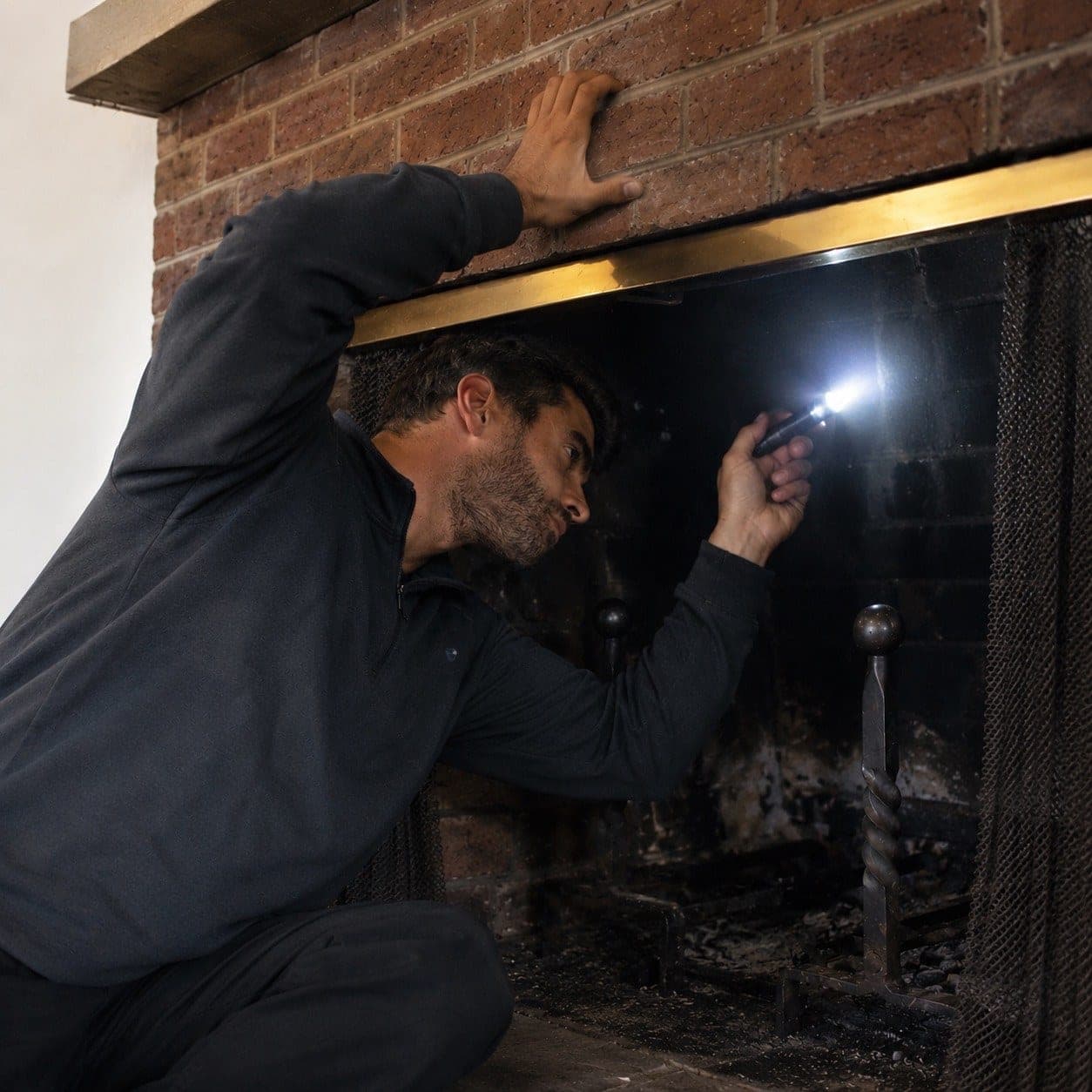
In many houses, a furnace, boiler or water heater sends its exhaust into a chimney flue instead of a dedicated vent. When that's the case, the chimney is part of how the appliance vents to the outside. Before a rental inspection, ask us to look at the appliance side of the chimney as well as the fireplace side. The Village carries out its own inspection and decides on the license. Our report doesn't replace the Village inspection, but it tells you what to fix before the inspector arrives.
What we check on a flue that serves a furnace, boiler or water heater
- The vent pipe is attached where it enters the chimney and isn't loose or separated
- The flue is open to the top, with no nests, debris or fallen masonry blocking it
- The flue liner has no cracks, gaps or missing sections
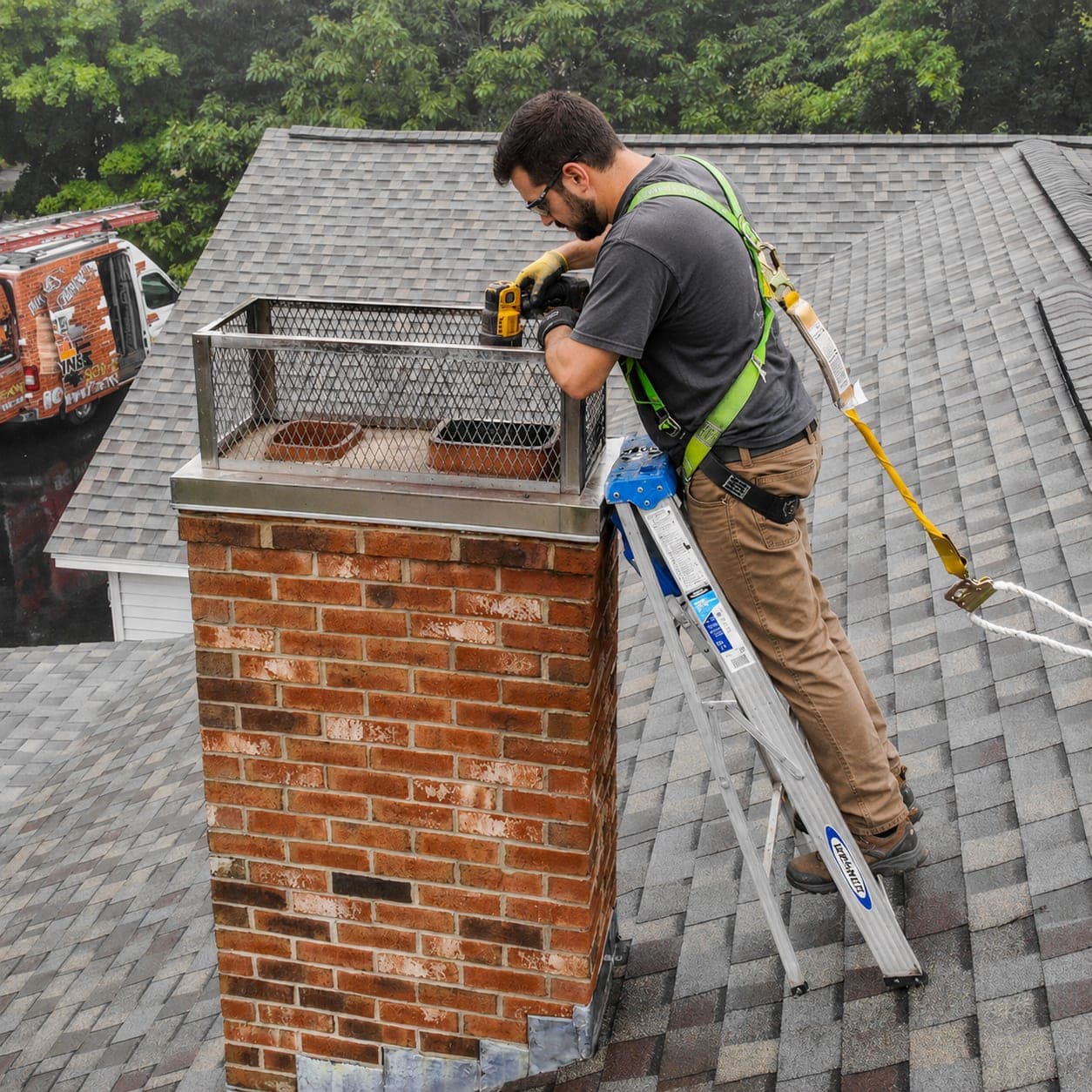
- The chimney cap and cover at the top are intact and not restricting exhaust
- Staining on the brick or ceiling near the chimney that points to moisture or condensation
- Odors near the fireplace or appliance that suggest a draft or blockage problem
Chimney inspection in brief
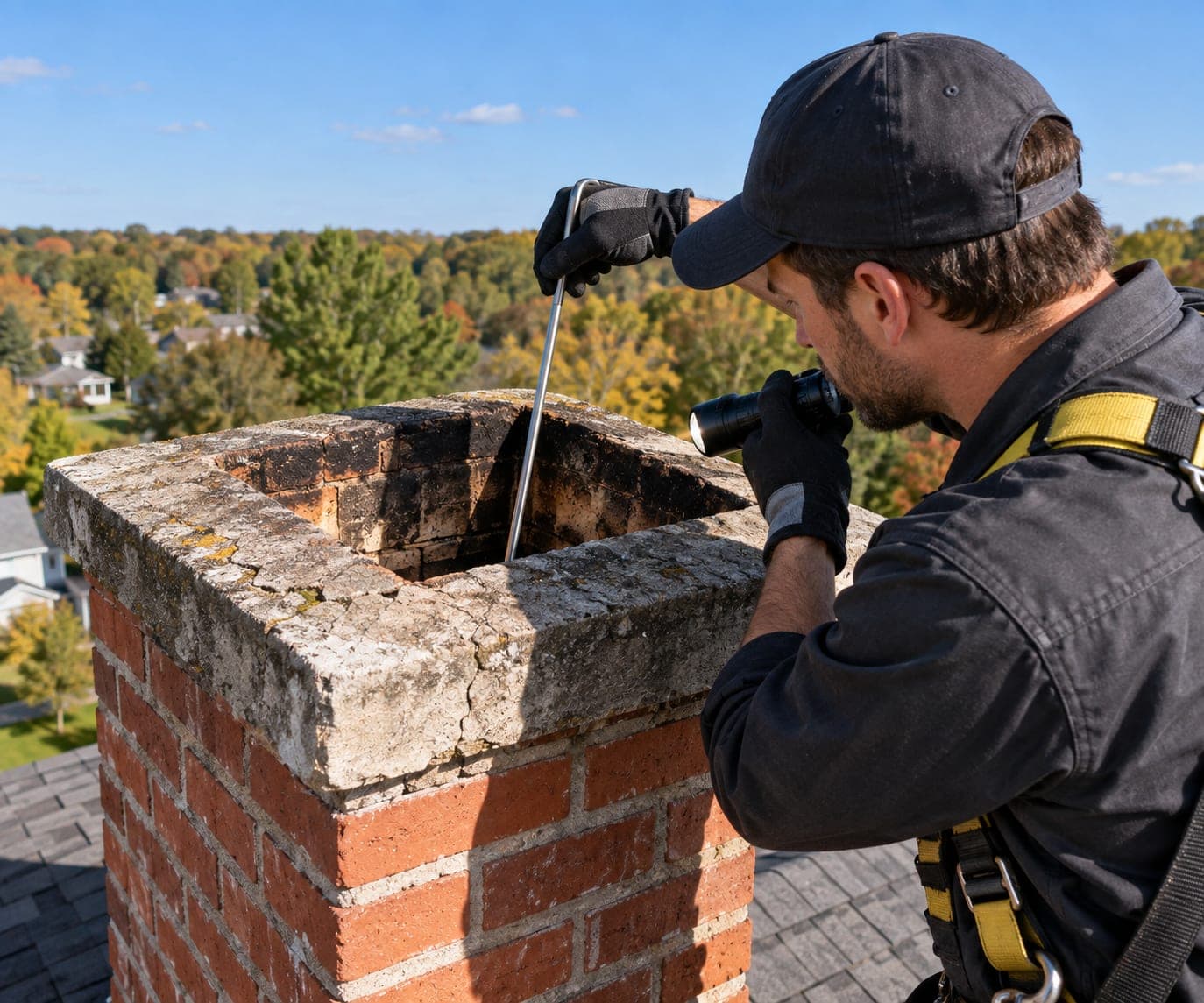
A chimney inspection examines the whole system: firebox, damper, smoke chamber, flue and liner, plus the outside brick, mortar, crown, cap and flashing. Inspections are usually grouped into three levels. A level 1 is a visual check of the parts you can reach. A level 2 adds a camera run through the flue and is common when a home is sold or an appliance or fuel changes. A level 3 is for concealed damage and involves opening parts of the structure. Read more about how chimney inspection works.
What a camera shows inside the flue
A chimney camera inspection runs a camera up the flue so we can see what you can't from the firebox or the roof. It shows cracked flue tiles, open joints, creosote buildup and blockages. It's especially useful when a gas furnace or water heater vents through a flue that no one has looked inside for years.
When another job fits better
- If the liner is cracked, missing or the wrong size for the appliance it serves, the fix is a new liner. Learn about chimney liner installation for homes in Palatine.
- If the flue is coated with heavy buildup, it needs a sweep and creosote removal more than another look. For background, read our guide to creosote dangers and why chimney maintenance matters.
- Cracked or spalling chimney brick and worn mortar call for masonry repair or tuckpointing, which we handle once the inspection shows the extent of the damage.
- A blocked chimney flue from nests or debris calls for blockage or animal and nest removal to clear it.
Booking an inspection
We do gas fireplace and gas appliance work and service all major brands. For the full details of our chimney inspection service, or for everything else we do in Palatine, get in touch or request an estimate.
Sources (1)
The sources of the Palatine facts on this page.
- 1Village of Palatine Neighborhood Services Division - Rental Dwelling Inspection Checklist (Interior); Village of Palatine - Rental Program Overview