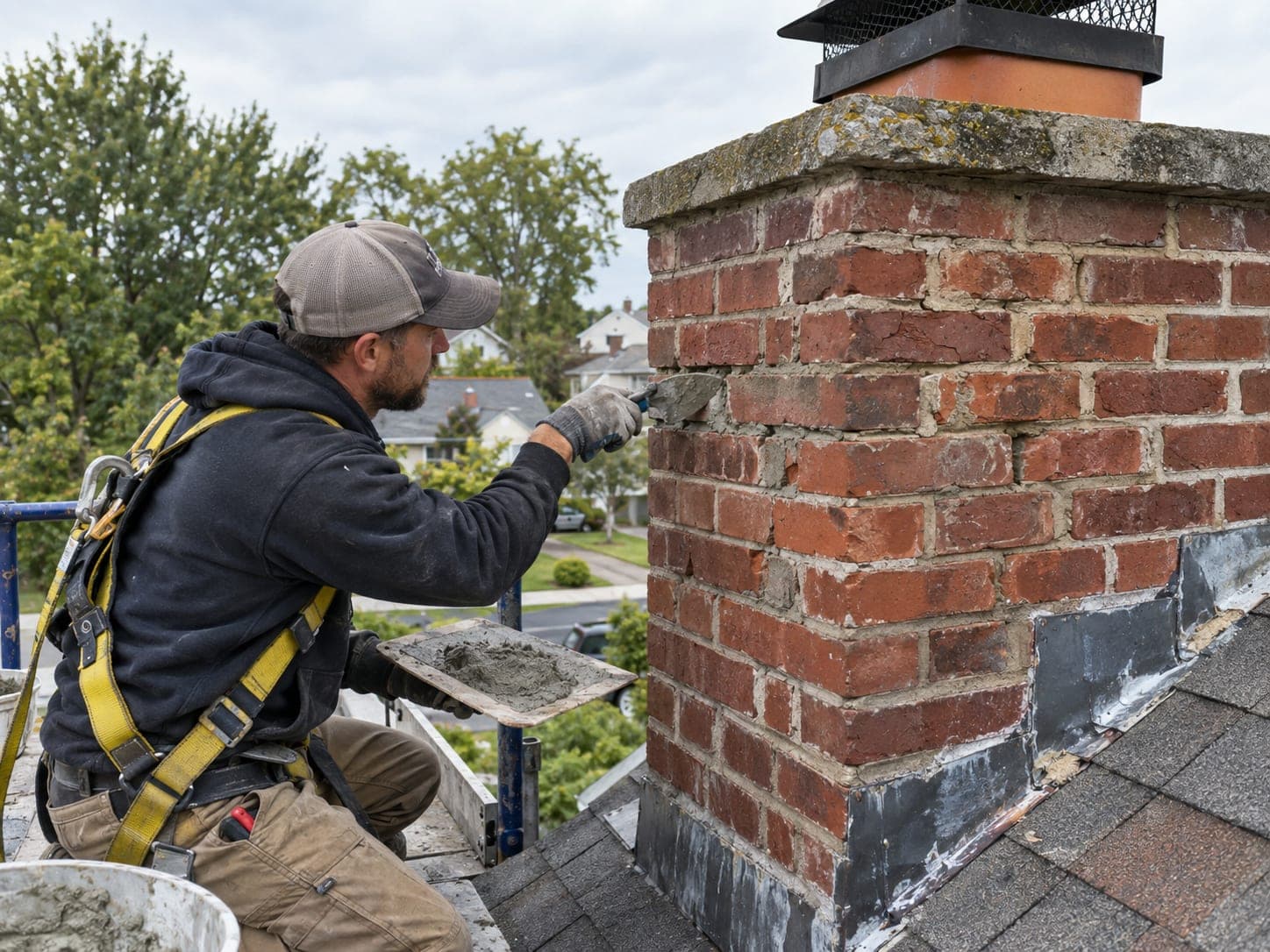
What Palatine's re-roof rules mean for chimney flashing
Flashing is where a chimney meets the roof, and it causes many chimney leaks. The Village of Palatine Community Development Department's 2026 Single Family Re-Roof Handout sets two requirements for this joint. Both matter if you're putting a new roof on a house with a brick or stone chimney.
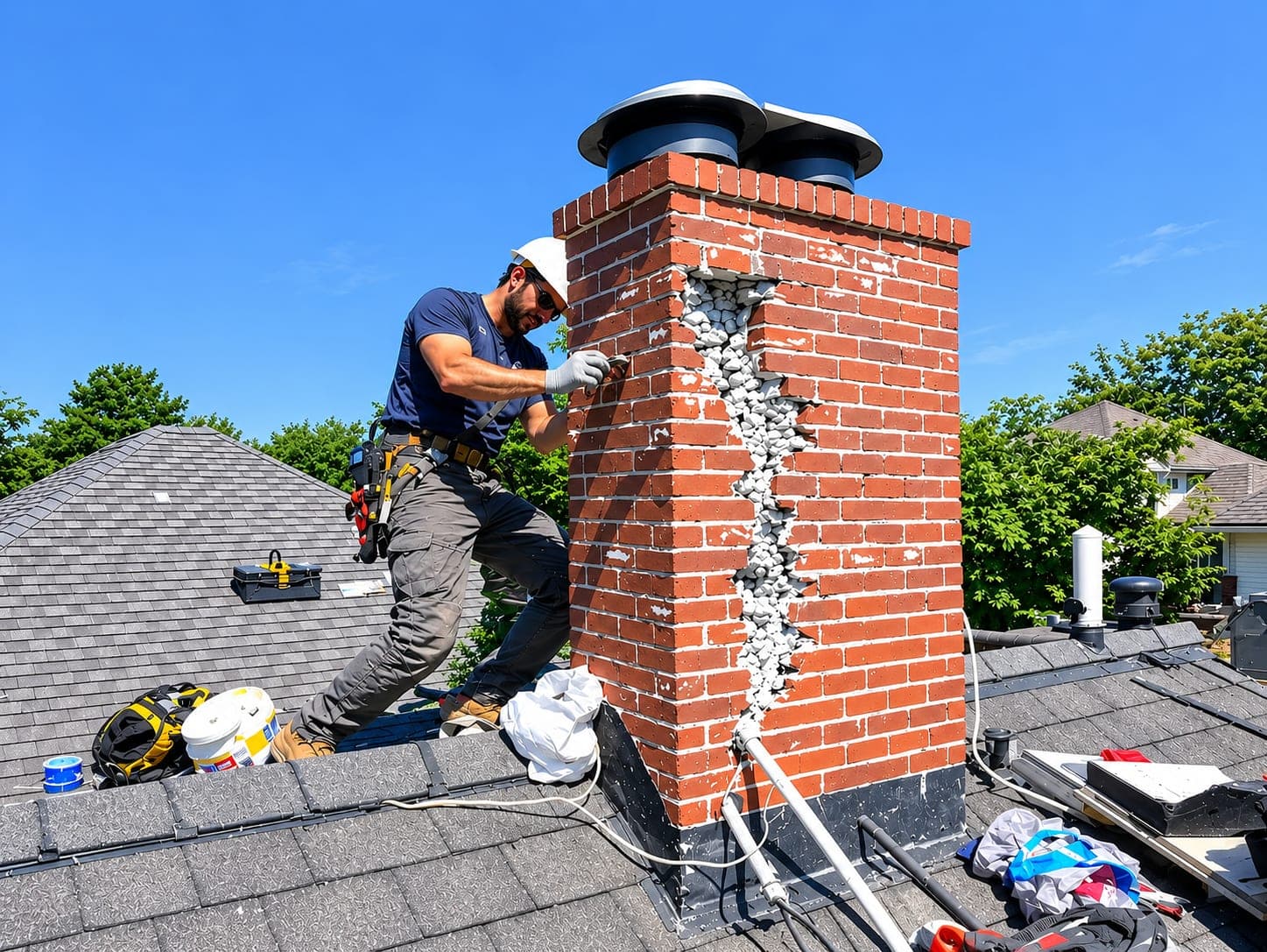
Counter flashing has to be cut into the masonry joint
According to the 2026 Single Family Re-Roof Handout (Village of Palatine Community Development Department), counter flashing at masonry chimneys must be cut into the masonry joint. It can use either the stepped flashing method or a straight saw cut 1 inch deep parallel to the roof line. Counter flashing is the upper layer that covers the base flashing. Under this handout, it can't simply be glued or caulked onto the face of the brick.
For you, this means the mortar joints where the flashing is set have to be solid. If the mortar is crumbling, a saw cut has nothing sound to hold the flashing. In that case, the joints usually need repointing before or during the flashing work. We look at the condition of those joints as part of the repair estimate.
Worn or poorly installed flashing gets replaced, not reused
The same handout requires existing edge, base or counter flashing that is damaged, deteriorated, in disrepair or improperly installed to be replaced with new flashing as required by the International Residential Code (source: 2026 Single Family Re-Roof Handout, Village of Palatine Community Development Department). If your current chimney flashing is rusted through, pulling loose or was installed the wrong way, a re-roof is the point where it gets replaced.
Before a re-roof on a home with a masonry chimney
- Check whether the mortar joints near the roof line are sound enough to take cut-in counter flashing.
- Decide who is handling the chimney flashing and how it ties into the new roofing.
- Have the crown, cap and upper brickwork repaired at the same time, while access is easy.
- Ask for any leaks or interior water stains near the chimney to be traced before the new roof covers the evidence.
Chimney repair in brief
Chimney repair covers the parts that wear out or let water in. That includes cracked or spalling brick, eroded mortar, a crumbling crown, damaged caps and chase covers, failing flashing, and flue damage. We start with a look at the whole chimney, explain what's causing the problem, and give you a free estimate before any work begins. For the full scope and how a job runs from start to finish, read about our chimney repair service.
When repair is the right call, and when it isn't
- Leaks around the chimney: flashing, crown or mortar repair is usually the fix, especially before or during a re-roof.
- Cracked crown or missing cap: repair or replacement keeps water out of the flue and masonry. If you have a metal-topped prefab chimney, read chimney cap vs chase cover to see which part your chimney has.
- Adding a fireplace rather than fixing one: that's a different project, covered under fireplace installation in Palatine.
More for Palatine homeowners
For everything else we handle in the area, including cleaning, inspections and fireplace work, see our services in Palatine. When you're ready to fix a chimney, request an estimate.
Sources (1)
The sources of the Palatine facts on this page.
- 12026 Single Family Re-Roof Handout (Village of Palatine Community Development Department)