What Glen Ellyn's records mean for chimney tuckpointing
According to the CMAP Community Data Snapshot (American Community Survey 2020-2024 five-year estimates), 16.0% of Glen Ellyn's housing units were built before 1940 and 31.0% between 1940 and 1969, and the median year built is 1971. By those figures, nearly half the village's housing units date from before 1970. That matters for tuckpointing because older brick and its original mortar are often softer than modern materials. The right repair depends on what the chimney was built with, not on whatever mortar is easiest to buy.
Mortar choice for older, softer brick
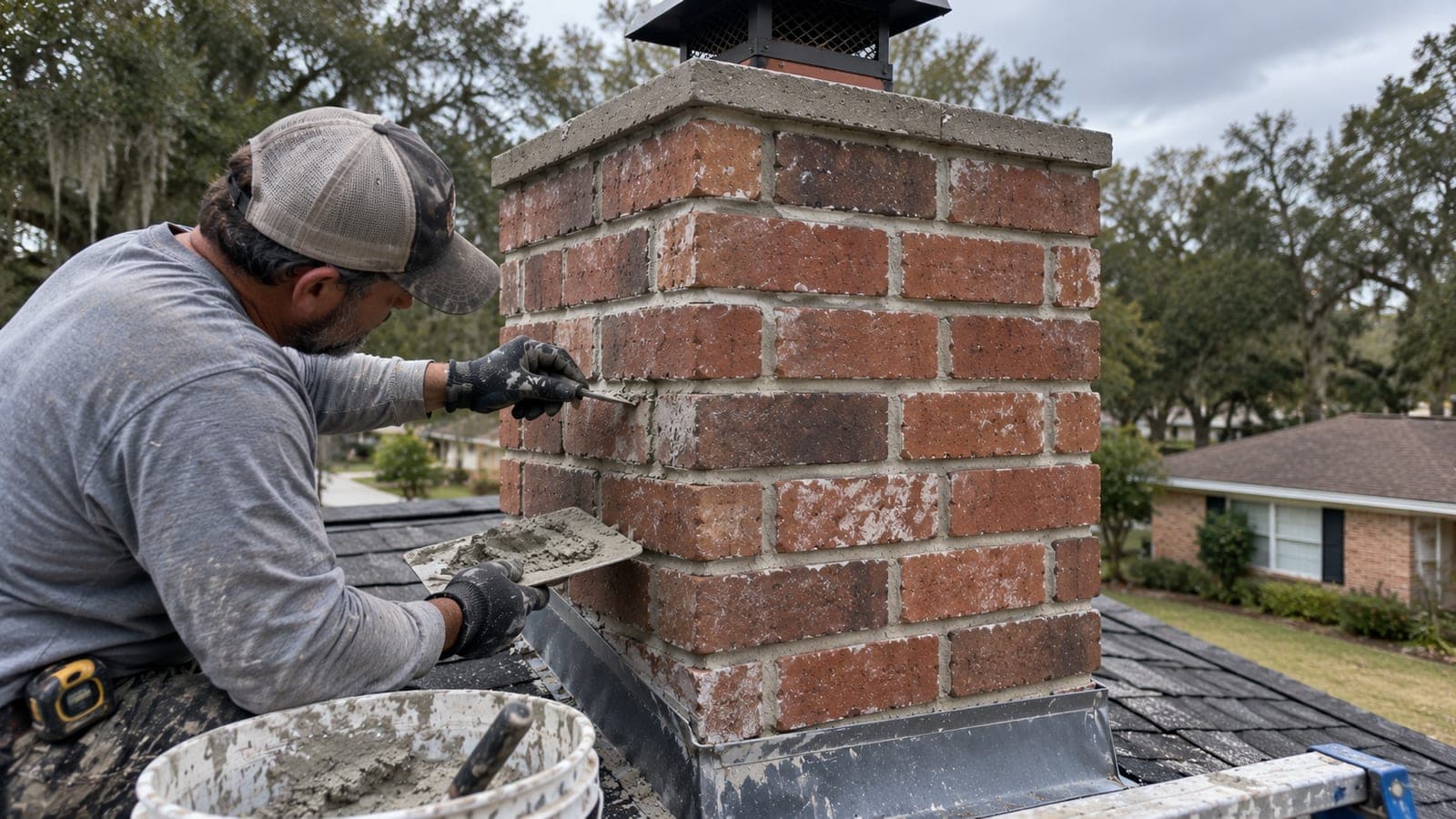
Glen Ellyn's Historic Preservation Maintenance and Alteration Guidelines (2009 edition) advise repointing chimneys with a lime mortar that has a very low cement content, noting premixes are generally not appropriate for older, softer brick (source: Village of Glen Ellyn Historic Preservation Commission). As a general masonry principle, new mortar should be weaker than the brick around it. A hard, cement-heavy mix forces movement and trapped moisture into the brick, and the brick faces can crack or flake off as a result.
What we check before mixing mortar for an older chimney
- How hard the brick faces are and whether any are already flaking
- The color, texture and makeup of the original mortar
- Joint width and the tooled profile of the existing joints
- Whether earlier repairs used a hard cement mortar that needs to come out
- Where the damage is concentrated, such as the upper courses, the crown area or the roofline
When a building permit comes into play
The Village of Glen Ellyn's Over-the-Counter Building Permit application lists masonry tuckpointing over 300 square feet as an exterior alteration under that permit (source: Village of Glen Ellyn Community Development Department). Measure the scope before work starts. If the tuckpointing area is near or above that size, confirm the current requirements with the Village's Community Development Department so the paperwork is in order before the first joint is ground out.
Chimney tuckpointing in brief
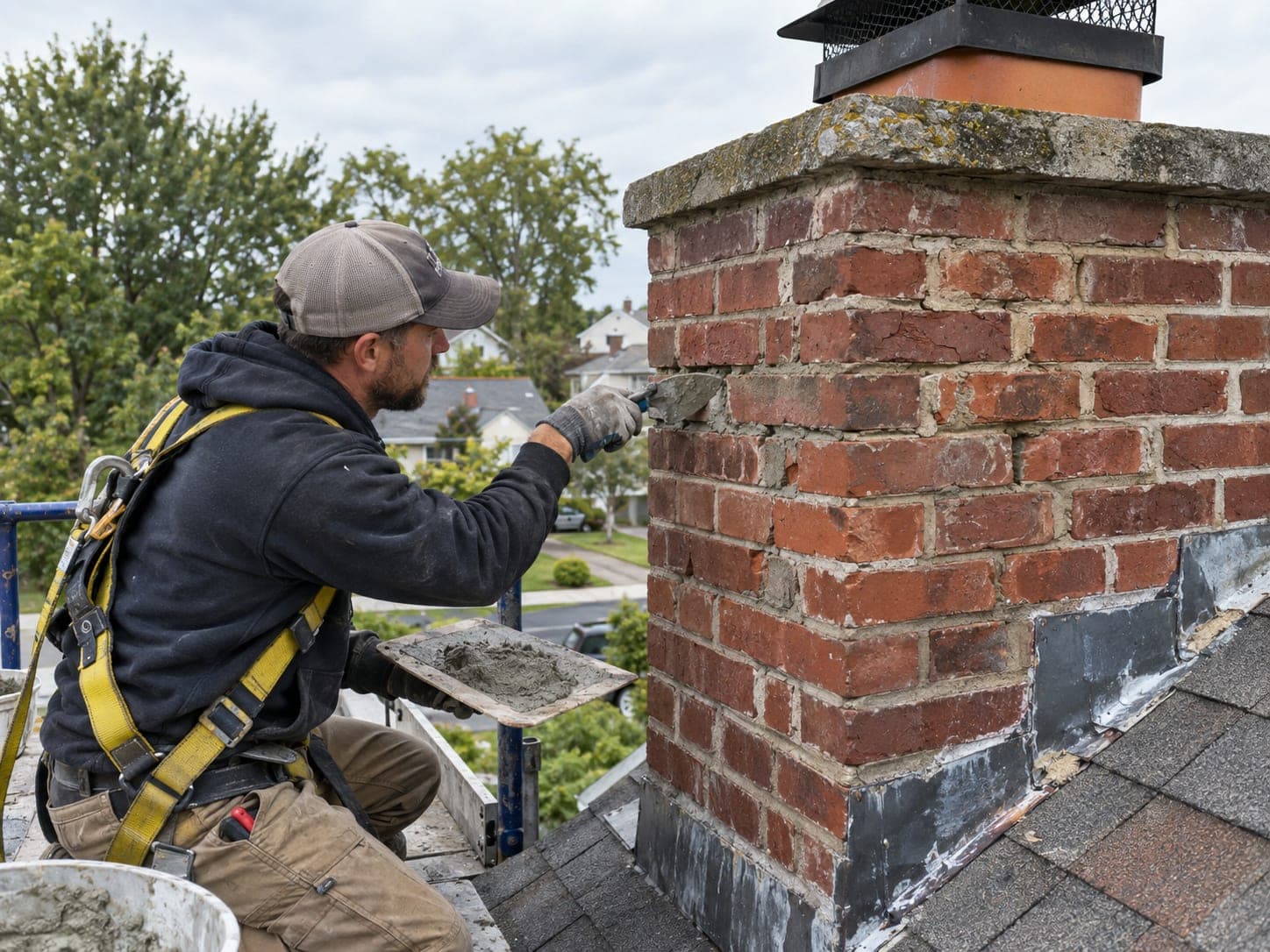
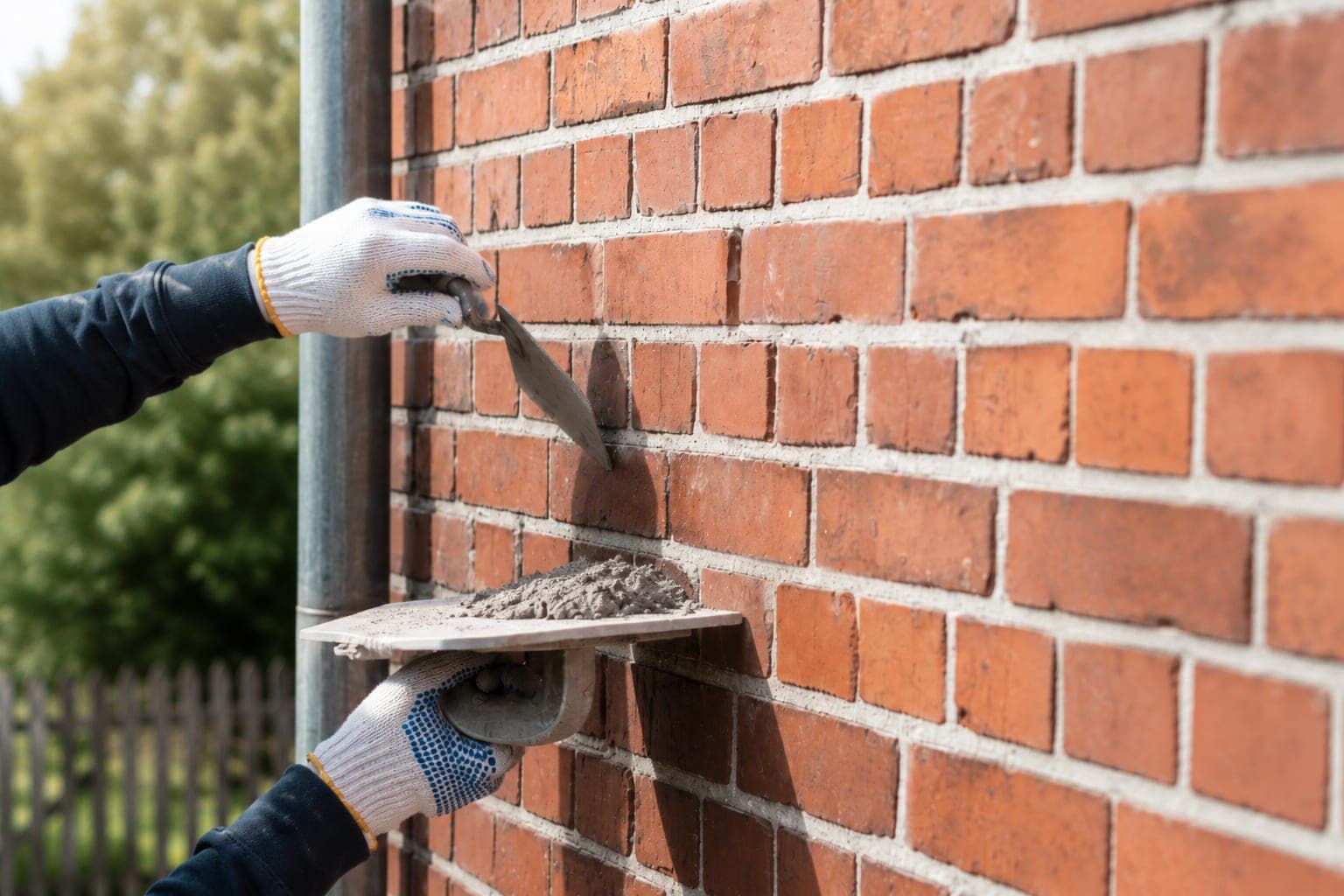
Tuckpointing removes cracked, crumbling or recessed mortar from the joints between chimney bricks to a consistent depth. The joints are then refilled with fresh mortar, packed in layers and tooled to match the existing joint profile. This restores the seal that keeps water out of the masonry. It does not, on its own, fix a cracked crown, failed flashing or broken bricks. For preparation, curing and what to expect on the day, read how chimney tuckpointing works.
Tuckpointing or a different repair?
- Joints are worn but the bricks are solid: tuckpointing is usually the right job.
- Bricks are loose, spalled or the chimney leans: sections may need to be taken down and relaid. Our guide to chimney rebuilding vs tuckpointing explains where the line falls.
- Water shows up inside but the joints look sound: the flashing at the roofline or the crown on top is a more likely entry point, and a leak inspection comes first.
- Brick stays damp after rain even with good joints: a breathable water repellent applied after the joints are repaired can help.
Booking chimney tuckpointing in Glen Ellyn
We look at the brick, the existing mortar and the extent of the joint damage, then explain whether tuckpointing alone will do or whether other masonry work should be handled at the same time. The full chimney tuckpointing service covers the process in more depth, and for chimney, fireplace and dryer vent work beyond masonry, you can browse everything we handle in Glen Ellyn.
Free estimates.
Get in touch to request an estimate for tuckpointing your chimney.
Sources (2)
The sources of the Glen Ellyn facts on this page.
- 1CMAP Community Data Snapshot | Glen Ellyn - Housing Age, 2020-2024
- 2Village of Glen Ellyn Community Development Department - Over-the-Counter Building Permit Application; Village of Glen Ellyn Historic Preservation Commission - Historic Preservation Maintenance and Alteration Guidelines (2009 Edition)